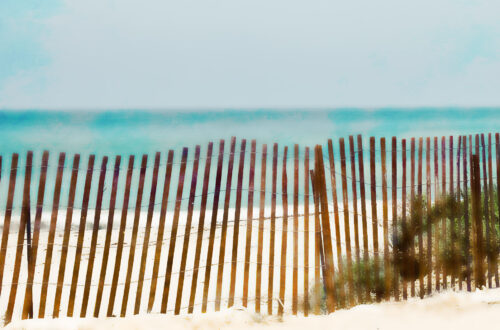
In the late 1960s we would use the area around this strip of beach as an unofficial overflow campground whenever the regular campgrounds – South Carlsbad and San Elijo – were full. Overnight camping here was illegal and therefore frowned upon by the authorities, but as long as we behaved ourselves they rarely hassled us about it. So, for the most part, we behaved ourselves.
It’s a beautiful stretch of coastline that sits right on the border of southern Carlsbad and northern Encinitas. These days, unlike many of the narrow beaches backed by high cliffs further south in Leucadia, South Ponto is highly accessible and wide open. It’s a favorite for families, sunbathers, and local surfers.
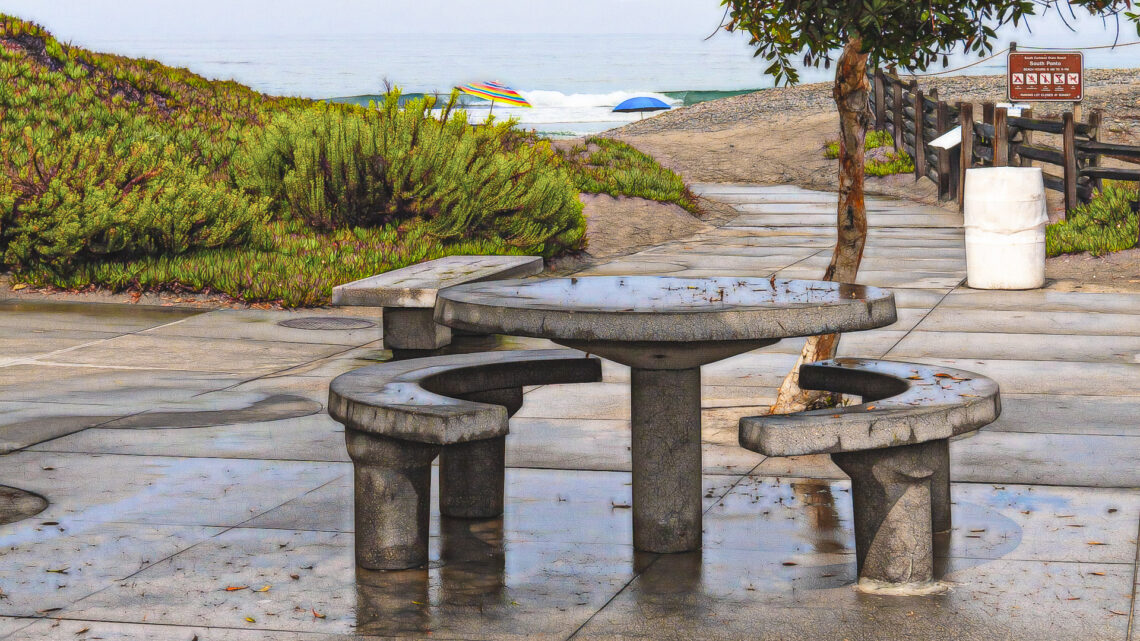
Surfing at South Ponto is widely considered one of the best and most reliable beach breaks in North County San Diego. It makes me wish my legs could still get me out across the sand to photograph the surf action instead of having to settle for a cement picnic table next to the parking area (above). The Army Corps of Engineers permanently opened up the adjacent Batiquitos Lagoon in late 1996, restoring permanent ocean tidal action. Now the moving water acts as a “sandbar factory,” constantly shifting the sand and creating great wave shapes. The main action happens around the rock jetties at the mouth of the lagoon. There is a year-round break with distinct seasonal personalities. In the summer, it’s a magnet for South/Southwest swells, throwing off fun, sectiony lefts from the north jetty. In the winter, West/Northwest swells fire up, producing solid rights off the south jetty. On an average day, it’s a fast beach break. On a great day with a solid combo swell or a tropical push, it can get surprisingly hollow, fast, and heavy—heavy enough to snap boards at low tide.
When Ponto is working, it gets crowded fast. It’s a highly visible spot right off Highway 101, attracting high-performance shortboarders and even local pros. The main peaks by the jetties are best left to intermediate and advanced surfers due to the crowd and the punchy nature of the wave. However, if you head a few hundred yards north of the main jetty, the peaks mellow out, offering a much better setup for beginners, longboarders, and foamies.
A couple of warnings. First, because of the lagoon inlet, there is a constant flow of water that can create a strong, nasty rip current. Experienced surfers often use this rip next to the jetty to paddle out easily, but it can quickly suck an unsuspecting swimmer or beginner out to sea. Second, when the water warms up in the summer, the sandy bottom becomes a haven for stingrays, so remember to do the “stingray shuffle” when walking out.