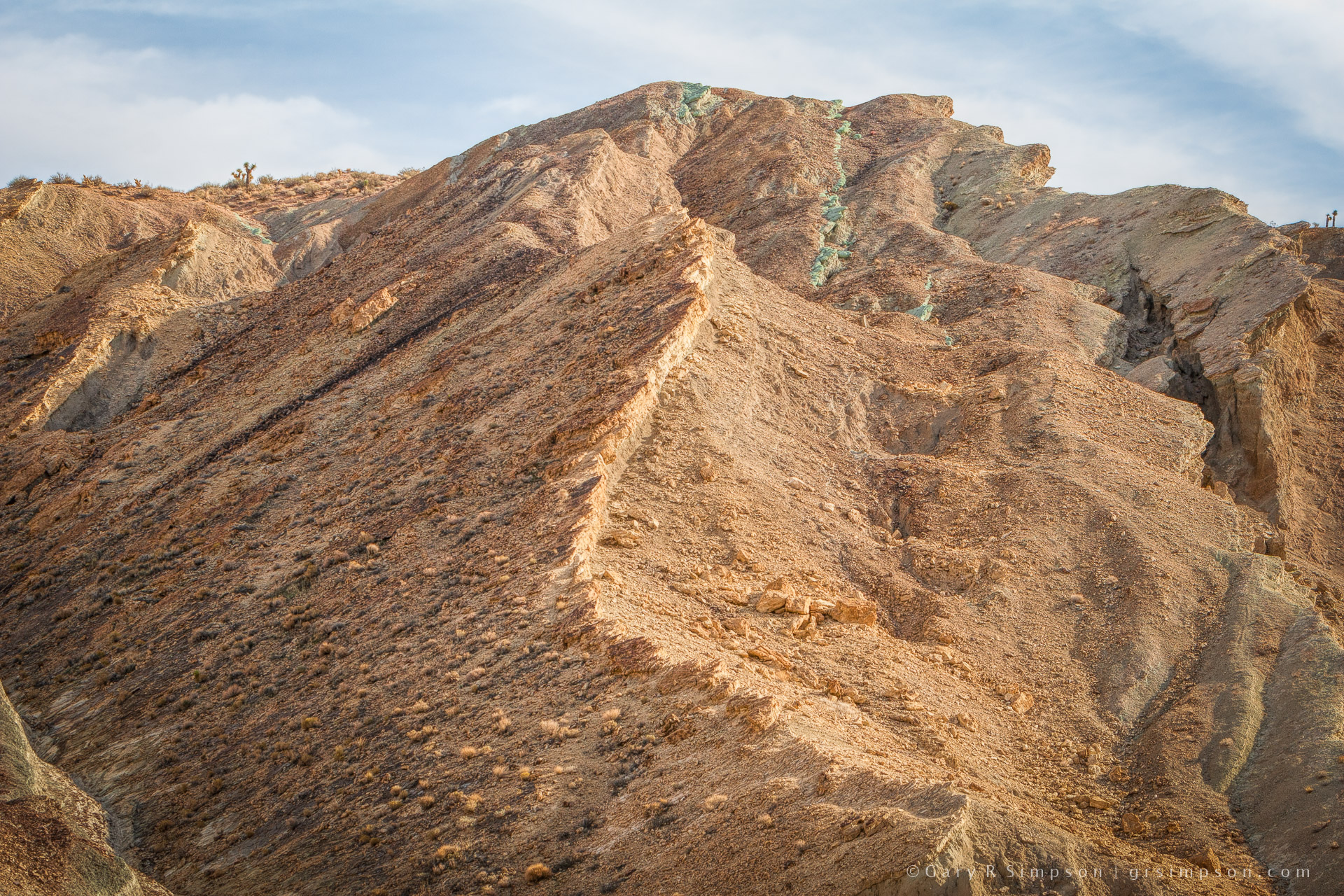
The rugged ridges and sharply tilted layers in this view of Rainbow Basin record millions of years of dramatic geologic change in the Mojave Desert. The rocks began as horizontal layers of sand, silt, gravel, volcanic ash, and sediments deposited by ancient rivers, lakes, and alluvial fans during the Miocene Epoch roughly 12 to 16 million years ago. Later tectonic forces folded and tilted these strata into the steeply dipping beds seen today, part of the broad Barstow Syncline that dominates the area. Differences in rock hardness allowed erosion to sculpt the landscape into knife-edged ridges, deep gullies, and striking badlands, with resistant sandstone and conglomerate standing high while softer shale, siltstone, and volcanic ash weathered away. The subtle greenish bands visible near the crest are likely altered volcanic ash or tuff layers, which serve as distinctive marker beds tracing the ancient volcanic history of the basin. Together, the folded strata, colorful sedimentary layers, and relentless desert erosion create one of California’s finest natural cross-sections through a dynamic landscape shaped by deposition, mountain building, and weathering over millions of years.