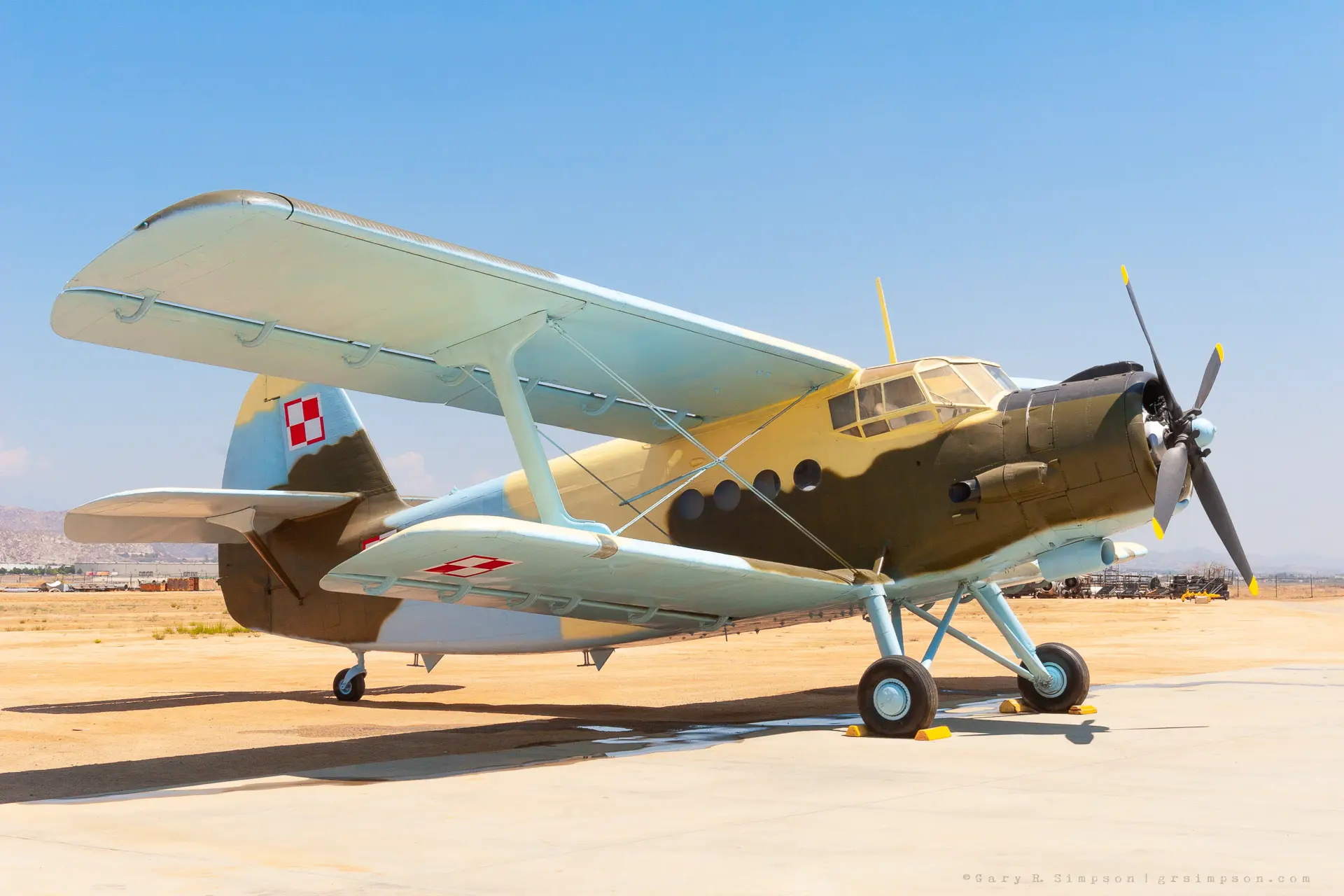
The Antonov AN-2 is a Soviet mass-produced single-engine biplane designed and manufactured by the Antonov Design Bureau since 1946 and serves as a prime example of the rugged, utilitarian aviation technology that defined much of the mid-to-late 20th century.
First taking to the skies in 1947, the An-2 was designed by the O.K. Antonov Design Bureau in the Soviet Union. It is one of the largest single-engine biplanes ever produced and is famously known for its extraordinary versatility. NATO assigned it the reporting name of “Colt,” it is affectionately known in the former Soviet Union as “Annushka” (or “Annie”) and sometimes the “Corn Farmer” due to its heavy use in agricultural roles.
The aircraft is highly regarded for its robust construction, ability to operate from rough or unpaved runways, and impressive slow-flight capabilities. Fitted with a 1,000-horsepower 9-cylinder Shvetsov ASH-62 radial engine, the An-2 has no stall speed recorded in its operating handbook and pilots have been known to fly the biplane under full control at 30 mph. A note from the pilot’s handbook reads:
“If the engine quits in instrument conditions (blind flying when you can’t see the ground) or at night, the pilot should pull the control column full aft (it won’t stall) and keep the wings level. The leading-edge slats will snap out at about 40mph (64km/h), and when the airplane slows to a forward speed of about 25mph [40km/h], the airplane will sink at about a parachute descent rate until the aircraft hits the ground.“
While designed in the USSR, the An-2 was produced in several countries, including China and the Ukraine, along with extensive manufacturing at the WSK PZL-Mielec plant in Poland from 1959 to 2002 (which explains why the aircraft shown here carries the Polish Air Force insignia). Its design allowed it to perform a vast array of roles, including passenger transport, search-and-rescue, agriculture, forestry, fire bombing, and scientific research. It is officially recognized in the Guinness Book of World Records as one of the most intensively manufactured biplanes in history.