
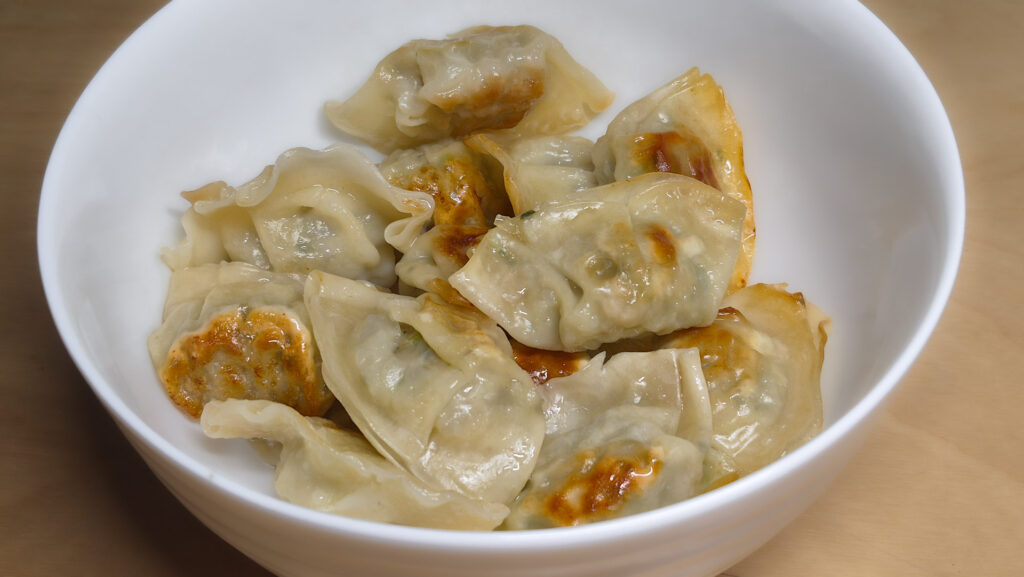
Potstickers have a long history in Chinese cuisine, but their story in America is closely connected to Chinese immigration and the growing popularity of Chinese-American food. The dumpling style known in Chinese as guotie, meaning roughly “pot-stuck,” was brought to the United States through Chinese communities, particularly those established on the West Coast during the 19th and early 20th centuries. For many years, these dumplings were primarily enjoyed within Chinese-American communities and restaurants, but they gradually became familiar to a much wider American audience as Chinese cuisine expanded beyond Chinatowns.
The term “potsticker” became especially common in American restaurants and cookbooks as a convenient English name for pan-fried dumplings. By the late 20th century, potstickers had become a familiar item on Chinese restaurant menus across the country and eventually appeared in frozen-food aisles and home kitchens. Today, American potstickers often reflect both traditional Chinese techniques and local tastes, with fillings ranging from classic pork and cabbage to chicken, shrimp, vegetables, and other adaptations.