
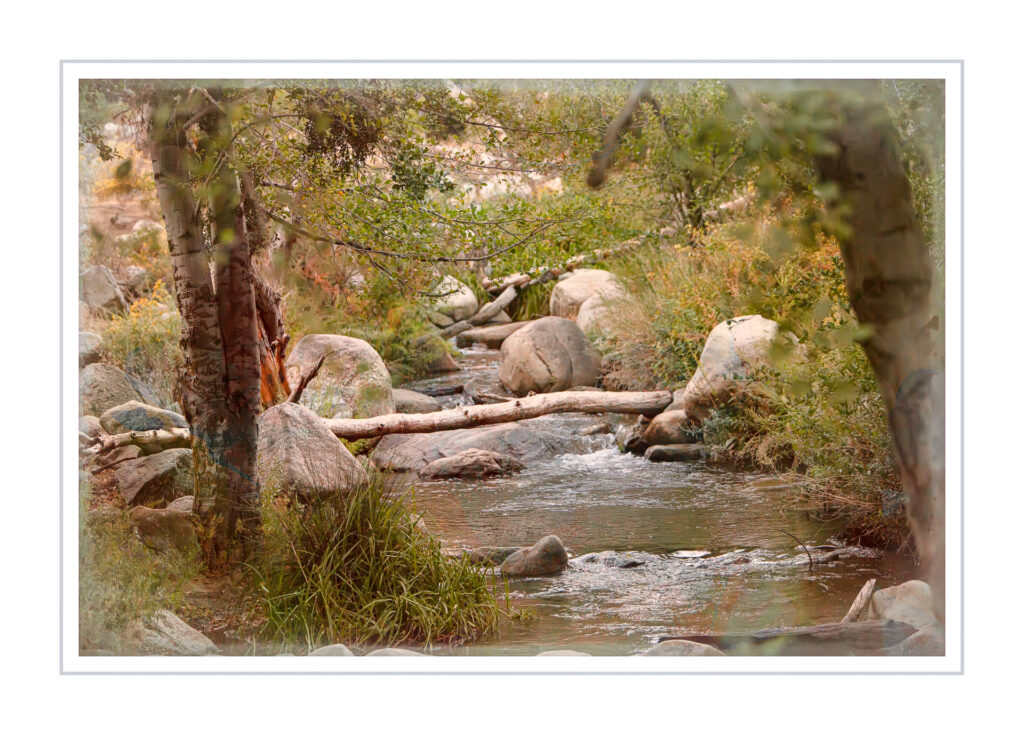
It is early July 2026 and the Santa Ana River at Seven Oaks is running as a modest, seasonally typical mountain stream rather than the fuller flow you’d see in spring. San Bernardino County has had a below-normal water year overall, with the region ranking among the drier years on record for the January-February stretch, and the broader Southern California outlook this spring pointed to much below normal seasonal runoff volume due to snow drought and early season melt. That means the snowmelt pulse that would normally swell the river through late spring has already tapered off heading into summer, so what’s flowing past the boulders and fallen logs is largely base flow — cool, clear water threading between rocks rather than a high, churning current.
That said, this isn’t a drought-stressed river by any means. Statewide, only a small sliver of California remains in active drought, with about 8% of the state under drought conditions and roughly half classified as abnormally dry as of early June 2026, and San Bernardino County itself has been largely out of the more severe drought categories. Reservoirs upstream and downstream, including Seven Oaks Dam, are operated for flood control rather than to hold back the river’s natural flow, so outside of storm events the channel through the Seven Oaks stretch just runs unimpeded at whatever the season allows. Given the area is now well into the dry season that typically runs from May through September, expect the streambed to keep receding gradually through the summer and early fall, with the surrounding riparian growth still green and lush from the wetter months behind it, before winter storms recharge the flow again later in the year.