People often resist accepting different perspectives in art because their ideas about what is beautiful, meaningful, or skillful are shaped by personal taste, culture, education, and familiarity. An unfamiliar style, unusual composition, unconventional subject, or unexpected way of photographing or depicting something may initially seem wrong simply because it challenges what the viewer expects art to look like. Yet art often gains much of its power from presenting the familiar in an unfamiliar way, encouraging viewers to consider that there may be many valid ways of seeing and interpreting the same subject.
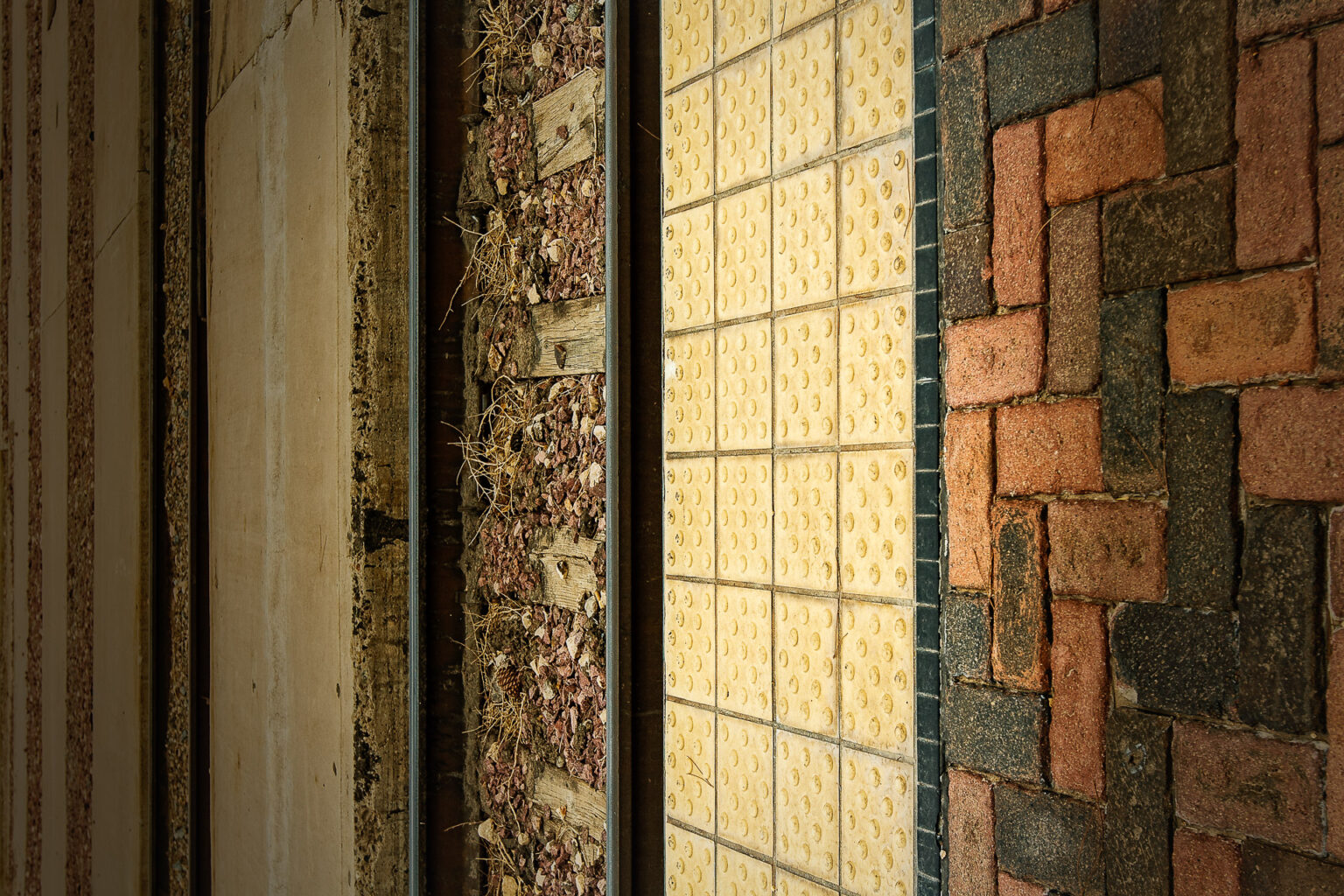
Something as simple as turning a photograph of an inanimate object sideways can reveal a surprisingly different photographic perspective, changing its proportions, silhouette, balance, and relationship to the surrounding space. A subject may look ordinary when photographed from its usual orientation, but rotating it can expose details, contours, textures, and shapes that are easily overlooked.
Sideways positioning can also make an object appear more abstract, emphasizing lines and geometric forms rather than its familiar identity, while shadows and highlights may fall differently across its surface and create new visual interest. This simple change of orientation encourages the photographer to stop thinking about what the object is and instead concentrate on its shape, pattern, texture, and visual character.
Well, if nothing else, I’m guessing this post made you turn your head sideways when you looked at the photo. It is a photograph of the station platform at the Western America Railroad Museum in Barstow, California.