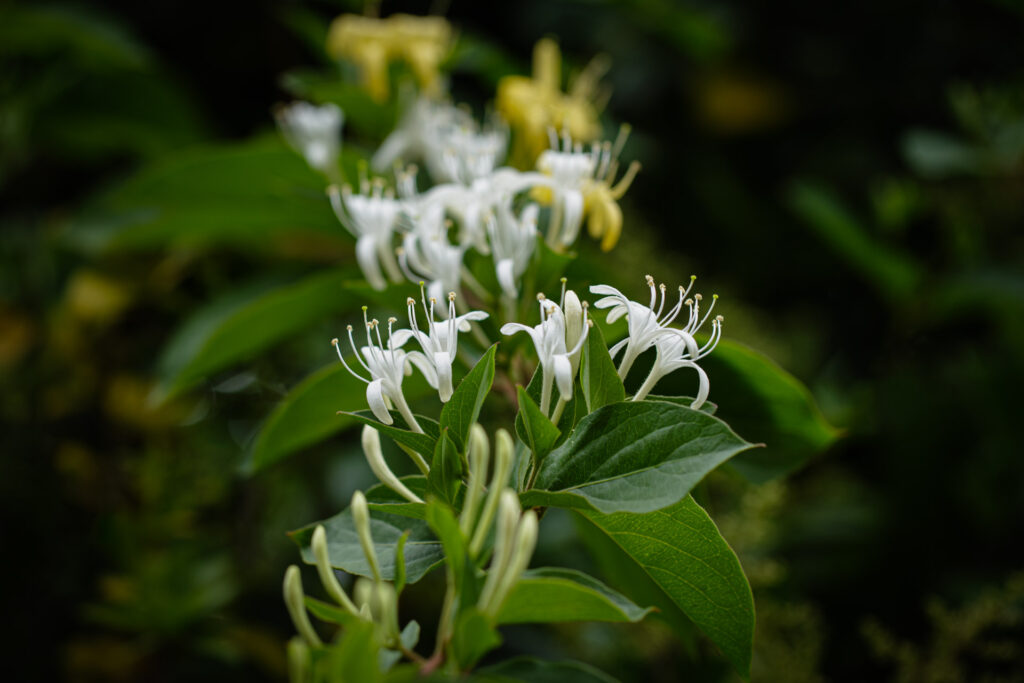
Japanese honeysuckle (Lonicera japonica) flowers can provide bees with a valuable source of nectar and some pollen, particularly when the plant is flowering abundantly. The fragrant, tubular white-to-yellow flowers attract honey bees, bumble bees, and other pollinators, with the nectar providing carbohydrates that fuel flight and foraging while pollen supplies protein and other nutrients needed by bees. Because Japanese honeysuckle can produce many flowers over an extended blooming period, it may offer useful forage when other plants are less available, although it is an invasive plant in many parts of the United States and should be managed carefully.