
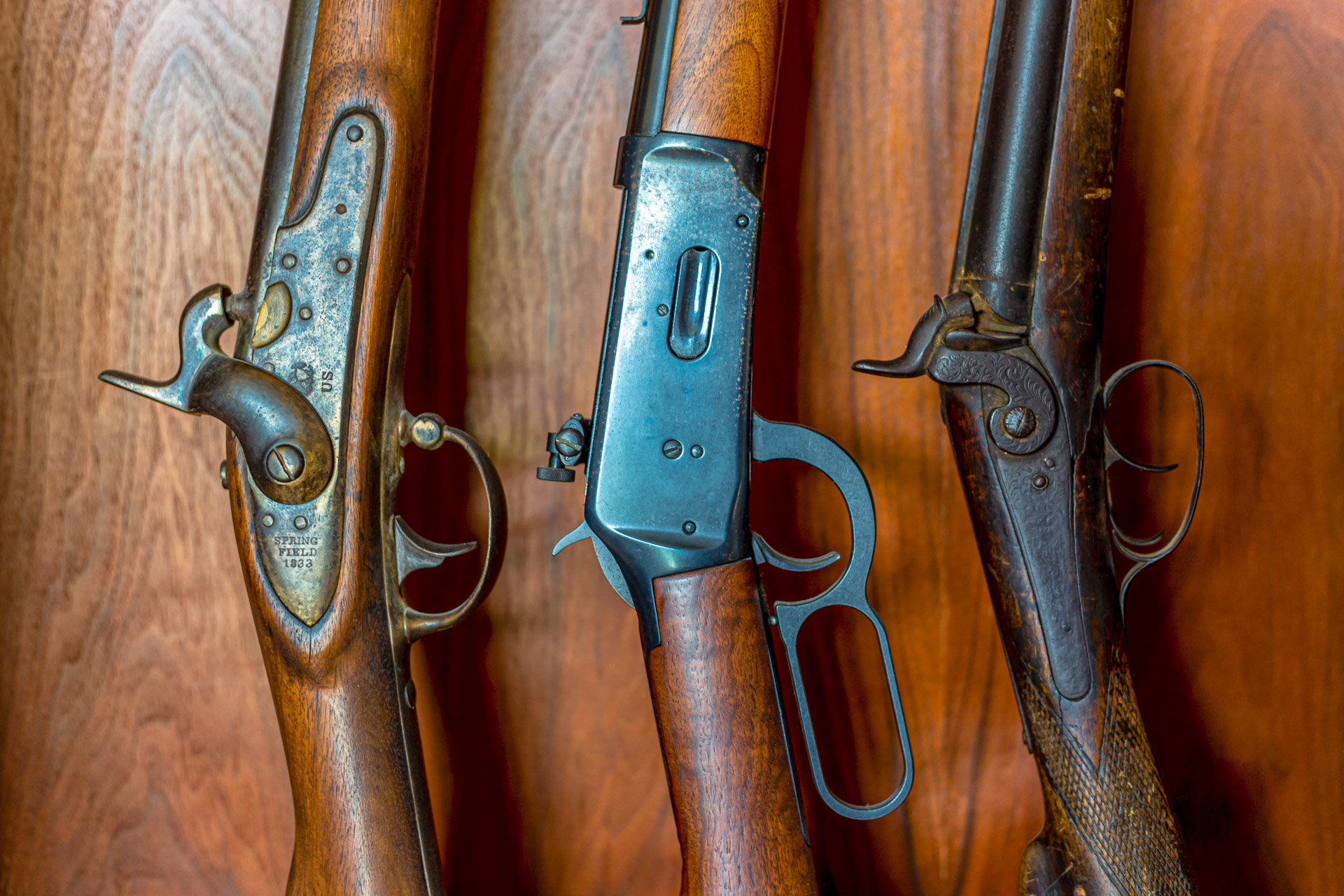
Long Guns
Gun collecting in the United States often combines an interest in history, craftsmanship, mechanical design, and family heritage. Collectors may focus on antique military arms, early hunting guns, classic sporting rifles, or firearms associated with particular manufacturers or periods of American history. Many older guns are valued as artifacts as much as functional objects, and responsible collecting typically includes attention to safe storage, preservation, documentation, and compliance with federal, state, and local laws.
Gun collecting in Canada also tends to center on history, craftsmanship, hunting traditions, military heritage, and older sporting arms, but it operates within a more restrictive legal framework than in the United States. Collectors must pay close attention to firearm classification, licensing, registration where applicable, and storage and transport rules, and recent federal prohibitions have further limited which modern firearms may be legally possessed or transferred. Antique firearms can occupy a distinct legal category, but the rules depend on the firearm and its specifications, so serious collectors often treat documentation and legal compliance as part of the collecting process itself.
A comparison of homicide rates in the United States and Canada shows a striking difference when firearms are involved. In 2023, the U.S. firearm homicide rate was 4.02 per 100,000 people, compared with 0.73 per 100,000 in Canada—about 5.5 times higher. Firearms were used in approximately 76% of homicides in the United States, versus about 38% in Canada.
Perhaps the most revealing comparison is the homicide rate when firearms are excluded. The rates were nearly identical: 1.24 per 100,000 in the United States and 1.18 in Canada. This suggests that much of the difference between the two countries’ overall homicide rates is associated with the considerably higher rate of firearm-related homicide in the United States.