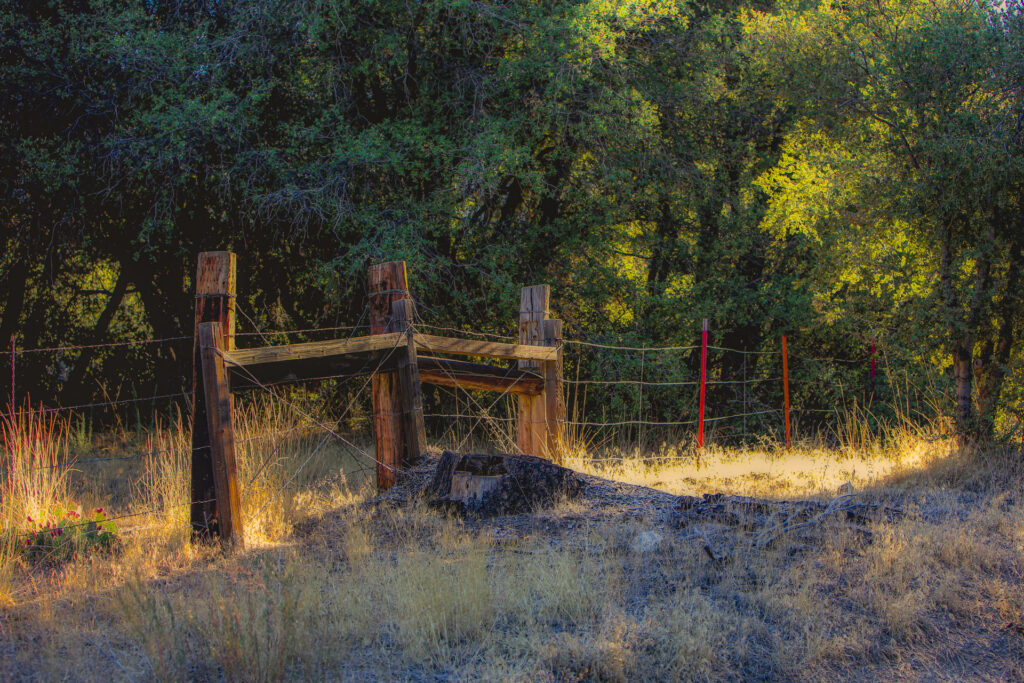
Cattle ranching came to the San Bernardino Mountains in the mid-1800s as herders like the Talmadges and Dunlaps drove stock up seasonal trails from the desert and valley floor into high meadows such as Little Bear, Bear, and Holcomb Valleys, and Seven Oaks itself sat along this route in the Santa Ana River canyon, having started as a sheep and cattle operation before Charles Lewis turned it into a resort in the 1870s-90s. Open range grazing was the norm through most of the 19th century, with cattle roaming freely across unfenced public and private land, until Joseph Glidden’s 1874 patent made mass-produced barbed wire cheap and practical, and it spread westward through the late 1870s and 1880s, transforming mountain ranching much as it did the rest of the American West; agricultural wire fencing generally stood around four feet tall using rot-resistant wood or steel posts, with barbed wire making it economically feasible to enclose rangeland for the first time, and this same shift would have reached line camps, corrals, and grazing allotments in the Seven Oaks and upper Santa Ana River area as mountain cattlemen fenced meadows, water sources, and driveways to manage herds moving between desert winter range and high-country summer pasture.