
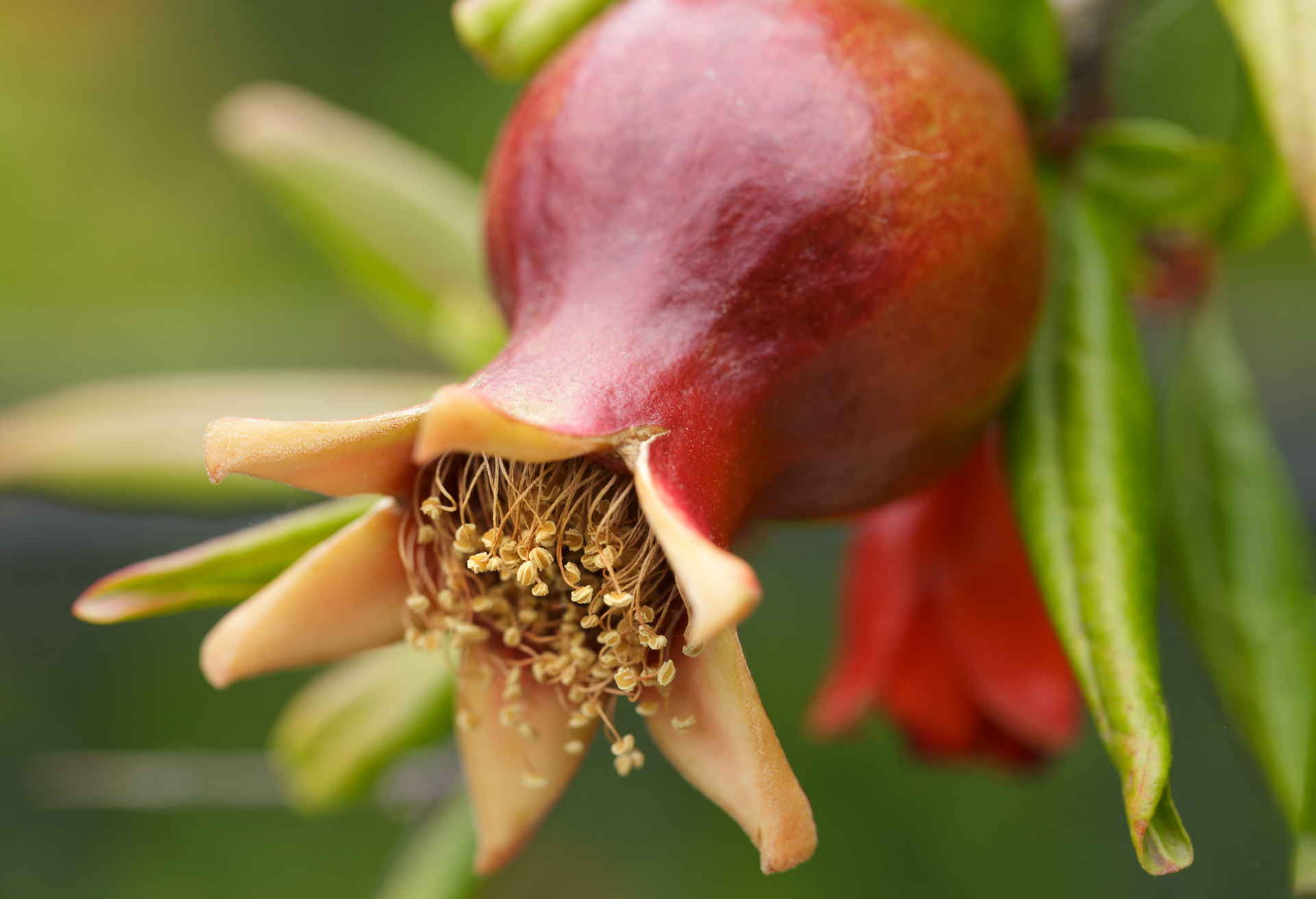
Pomegranate (Punica granatum) #2
This pomegranate is at the very early fruit-development stage, just after flowering and successful pollination. The swollen red structure is the young pomegranate fruit. The pointed, leathery “crown” at the end is the persistent calyx—the remains of the flower’s sepals—and the dry stamens are still visible inside it. The petals have already fallen away, which is a good sign that the flower has finished and the ovary has begun enlarging.
At this point the fruit is still quite young. Over the coming weeks it should steadily increase in size, while the crown remains at the end of the fruit. Depending on the variety and climate, a pomegranate generally needs several more months—often roughly 4–6 months after flowering—to reach full ripeness.
The photograph caught a particularly interesting transitional moment when the flower has essentially become the fruit, but traces of the blossom are still clearly visible.