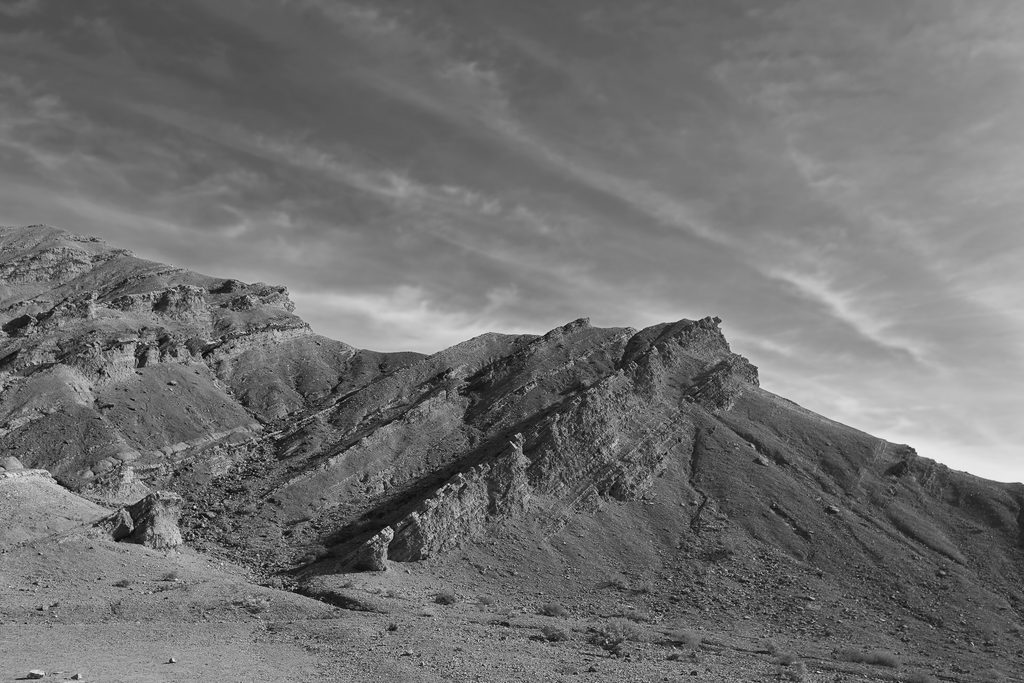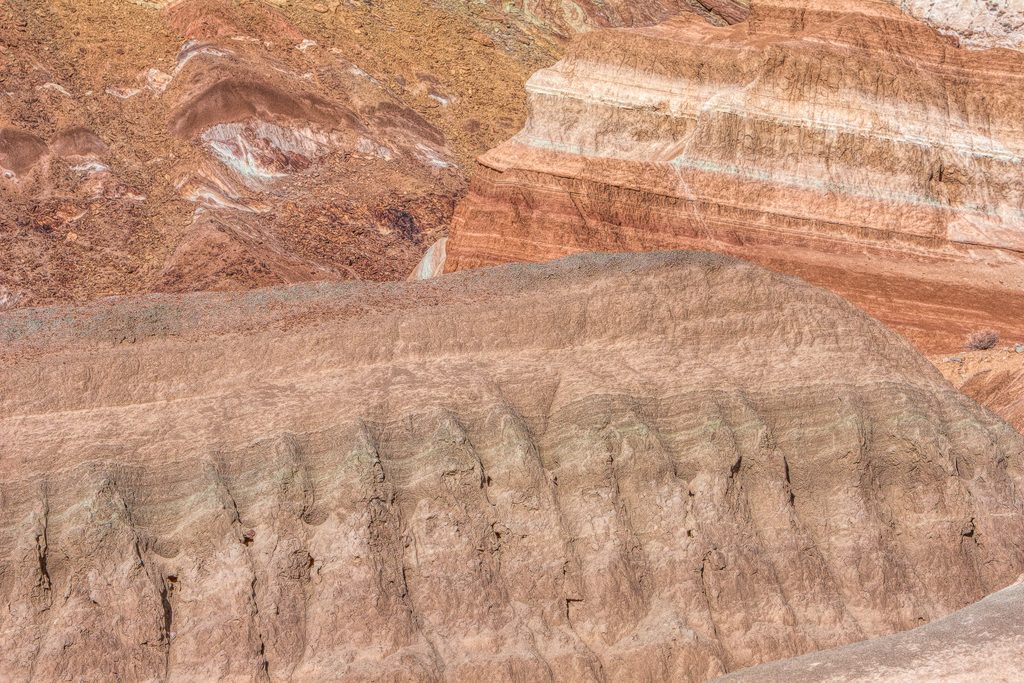
At first glance, Rainbow Basin looks like a collection of rugged desert hills shaped by wind and weather. Look more closely, however, and the landscape begins to resemble an open history book. The tilted ridges, contrasting colors, and deeply eroded slopes reveal a geological story that began millions of years ago, when this part of California’s Mojave Desert was a very different place.
Much of the scenery at Rainbow Basin is associated with the Miocene-age Barstow Formation, which is beautifully exposed throughout the surrounding Mud Hills. During the Miocene, sediments accumulated here in ancient lakes, streams, and surrounding floodplains. Mud, sand, gravel, and material from distant volcanic eruptions gradually built up in layers. Over immense spans of time, those sediments hardened into rocks such as sandstone, siltstone, conglomerate, and volcanic tuff.
Those layers did not remain peacefully horizontal. Tectonic forces associated with the continuing deformation of Southern California eventually folded, fractured, and tilted the rocks. Beds that were originally deposited nearly flat were pushed into the steep angles visible today. Erosion then began cutting through the uplifted landscape. Softer material disappeared more quickly, while harder layers resisted erosion and remained behind as the long, narrow ribs and sharp ridges that give Rainbow Basin much of its distinctive character.
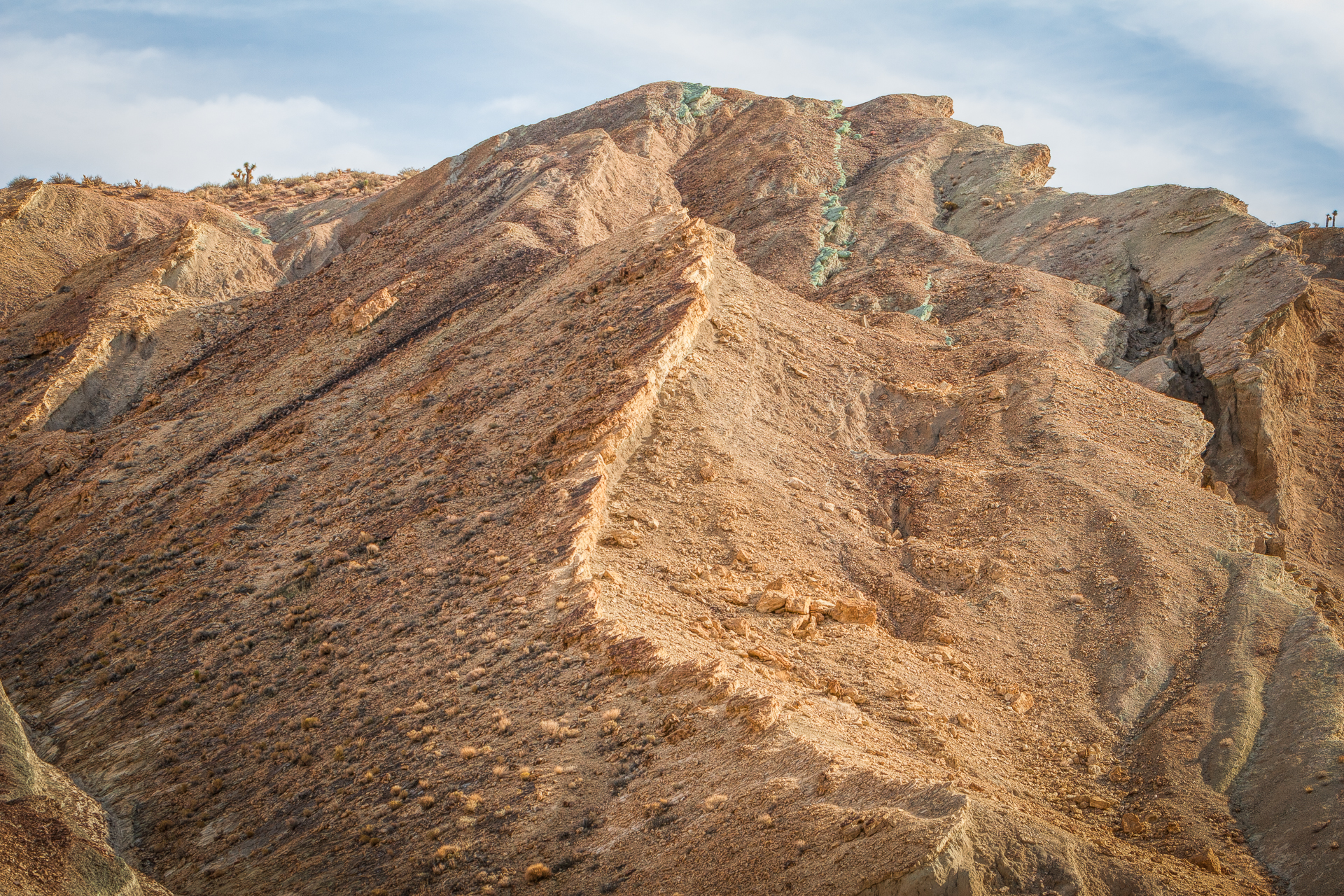
One of the most noticeable features in this photograph is the pale green material running through the brown hills near the center of the image. Different sediments, minerals, volcanic material, and weathering processes account for the remarkable variety of colors found throughout Rainbow Basin. From a photograph alone it is difficult to identify that particular green layer with certainty, but volcanic ash deposits are known within the Barstow Formation. Some of these ancient ash beds have been especially valuable to geologists because they provide markers that can be dated and compared with other layers.
The rocks also preserve evidence of the animals that once inhabited this region. Fossils discovered in the Barstow Formation include ancient camels, three-toed horses, mastodon relatives, saber-toothed cats, and many other mammals. Together, the fossils and volcanic ash layers have made the area an important location for understanding the Miocene history of western North America.
For me, one of the most interesting things about photographing Rainbow Basin is that the geology creates its own composition. In this photograph, a prominent ridge rises diagonally through the scene, leading the eye toward the higher formations. The neighboring ridges repeat the pattern, while the narrow greenish layer provides an unexpected contrast among the warm earth tones. The Joshua trees standing on the ridge at the far upper right provide a useful reminder of just how large these formations really are.
What we see today is therefore much more than an eroded desert hillside. It is the result of sediments deposited millions of years ago, hardened into rock, tilted and folded by movements of the Earth, and slowly exposed again by erosion. Every ridge reveals another layer and every layer represents another period of time.
At Rainbow Basin, the landscape itself is the history.