
I have a love/hate relationship with taking pictures of food at home.
To be clear, I am not talking about carefully styled food photography. No tiny herbs placed with tweezers, no dramatic backlighting, no strategically spilled flour, and no plate that took forty-five minutes to arrange before anyone was allowed to eat it. These are just food snapshots—whatever happens to be sitting on the table before I dig in.
And I really enjoy making them.
Maybe it is the colors, the shapes, the textures, or simply the challenge of making an ordinary meal look interesting for a few seconds. Food is also one of the easiest subjects I have available. I don’t have to drive anywhere, wait for the right weather, or worry about whether the light will still be good by the time I get there. Dinner shows up practically every day.
The problem comes when I put one of those pictures on my website.
Nobody seems to care.
A photograph of an old building might get some attention. A car, flower, street scene, or odd little object can usually find an audience. But put up a photograph of meatloaf, scrambled eggs, or whatever else happened to come out of the kitchen, and the reaction is roughly the photographic equivalent of everyone quietly leaving the room.
I understand it. My lunch probably means a lot more to me than it does to anyone else.
Still, I keep making the pictures.
Not every photograph has to be important, impressive, or especially interesting to somebody else. Sometimes photography is simply about noticing something in front of you and deciding it is worth remembering. For me, that occasionally includes dinner.
So the food snapshots will probably continue.
You don’t have to look at them.
But I probably will.
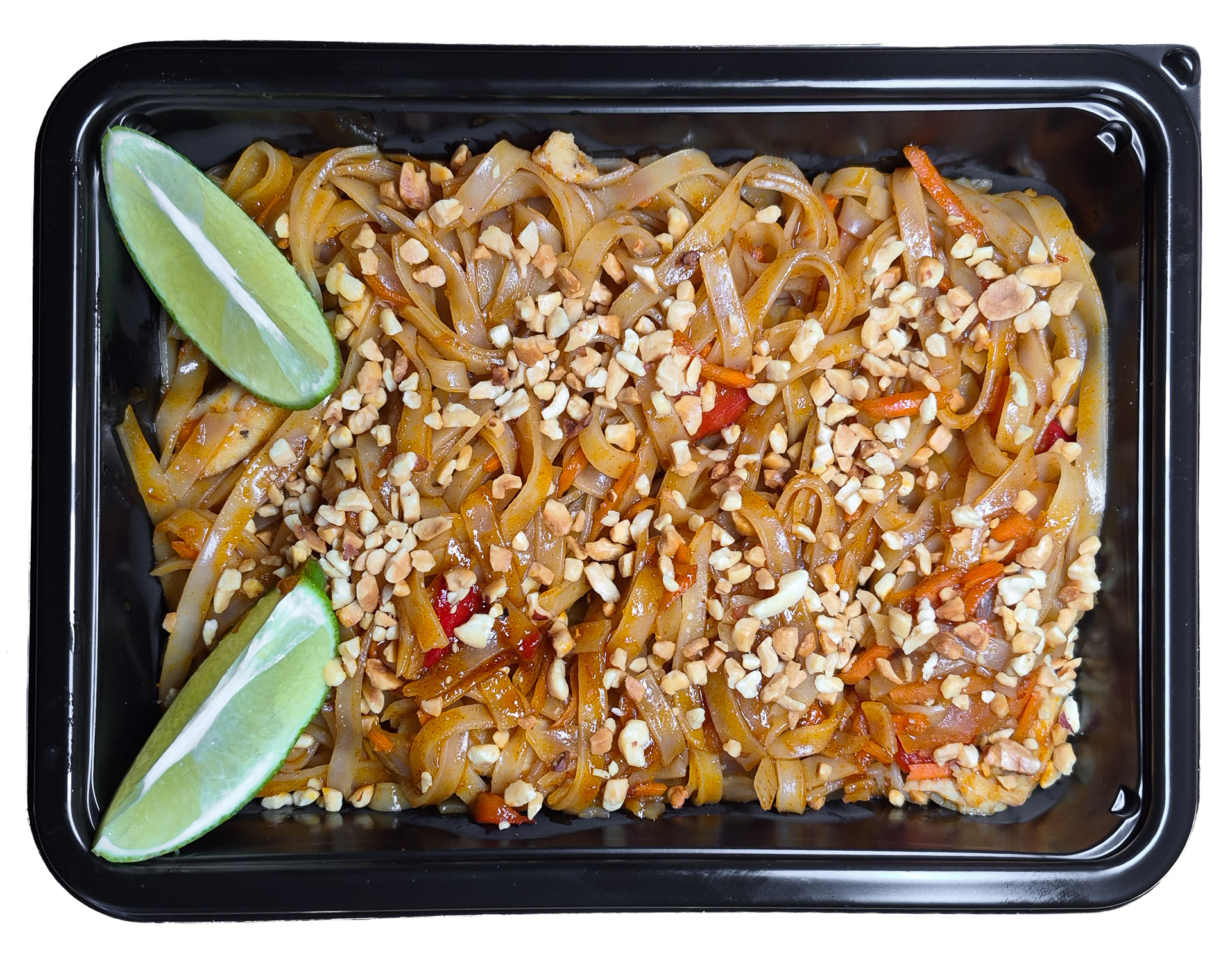
Okay, now back to the matter at hand (the Pad Thai snapshot).
Thai food seems to operate on the theory that if one flavor is good, five flavors arguing with each other must be better. Sweet, sour, salty, spicy, and savory all show up at the same time, somehow settle their differences, and produce something wonderful. Lime, fish sauce, chiles, herbs, coconut milk, tamarind, and enough garlic to discourage casual conversation can all end up sharing the same plate. It sounds chaotic, but Thai cooking has an impressive way of making chaos taste organized.
Then there is Pad Thai, possibly Thailand’s most famous culinary export and the dish many of us order when we want to feel adventurous without becoming too adventurous. Rice noodles are stir-fried with egg, tamarind, fish sauce, sugar, bean sprouts, and usually shrimp, chicken, or tofu, then topped with peanuts and served with lime. The result is sweet, tangy, salty, nutty, and occasionally spicy enough to make you reconsider several decisions you have made in life.
Interestingly, Pad Thai is not some ancient recipe handed down unchanged for a thousand years. The dish became especially popular in Thailand during the twentieth century, which makes it relatively young compared with many traditional foods. That hasn’t stopped it from becoming one of the dishes most closely associated with Thai cuisine around the world.
Of course, judging Thai food entirely by Pad Thai would be a little like judging American food entirely by hamburgers. Thailand has curries, soups, grilled meats, spicy salads, fried rice, noodle dishes, and regional specialties ranging from mild and aromatic to “I can no longer feel my lips.”
Still, Pad Thai remains a favorite for good reason. It arrives looking like a harmless pile of noodles and then proceeds to deliver half the flavor spectrum in a single forkful. Add a squeeze of lime, sprinkle on some peanuts, carefully consider the chile flakes, and enjoy.
Just keep a glass of water nearby.
Not that it will help much.