
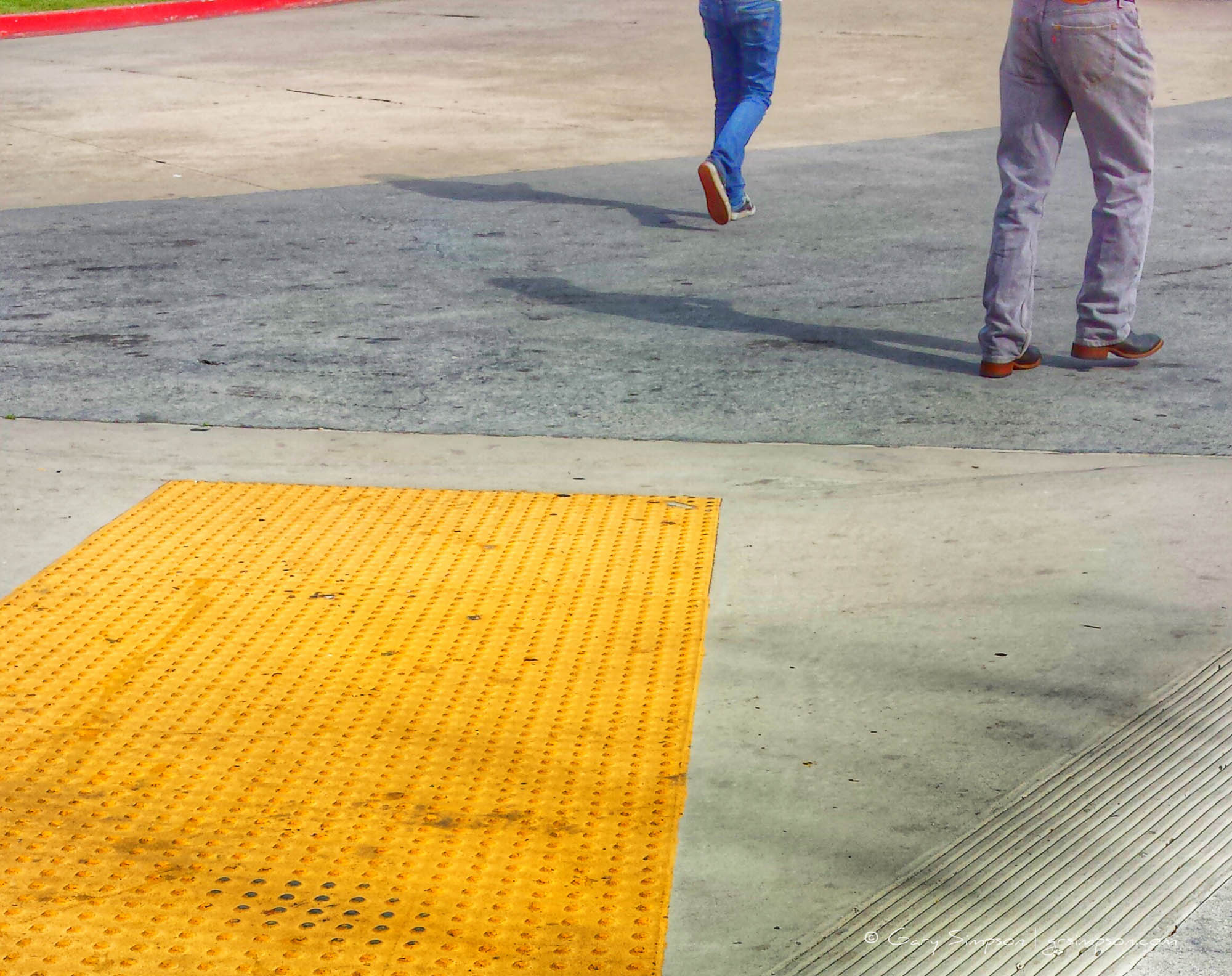
Over the years, as walking became more difficult and eventually something I could no longer do, photography changed along with me. It wasn’t a sudden change. It happened gradually, almost without my noticing at first. Places became harder to reach, familiar ways of photographing stopped being practical, and the simple act of wandering around with a camera—something I once took for granted—slowly disappeared from my life.
Photography used to involve a lot of walking. I could explore a place, follow a trail, circle a subject, cross a street for a better angle, or simply keep moving until something caught my attention. There was freedom in that. I didn’t have to think much about where I could go. If I saw something interesting in the distance, I could usually walk over and photograph it.
Losing that ability has changed the way I see a location before I ever take the camera out.
Now I notice parking, distance, pavement, curbs, slopes, accessibility, and whether I can actually get into position to make the photograph I have in mind. Sometimes the photograph is right there, but the place I would need to stand is somewhere I cannot reach. That can be frustrating, especially when I can clearly see the picture I would like to make.
For a while, I think I measured my photography against what I could no longer do. I thought about the trails I couldn’t follow, the viewpoints I couldn’t reach, and the freedom of simply wandering around looking for photographs.
Eventually, though, my photography began adjusting to the circumstances.
I started paying more attention to what was available from where I was. Instead of covering a large area, I might spend more time looking closely at a much smaller one. I began photographing more from parking areas, sidewalks, accessible paths, gardens, roadside locations, windows, and sometimes from the car itself. Subjects that once might have seemed too ordinary became more interesting simply because I was spending more time actually looking at them.
My photography became slower.
That isn’t necessarily a bad thing.
When you cannot continually move around looking for the next photograph, you tend to examine what is already in front of you. Light becomes more important. Small changes in composition become more noticeable. You wait. You watch. You begin finding photographs in places that might once have been nothing more than somewhere you passed through on the way to something else.
My choice of subjects has changed as well. I still enjoy photographing places, landscapes, people, cars, plants, buildings, and the odd things that catch my attention, but accessibility now plays a much larger role in determining what gets photographed. There are places I would love to photograph that simply are not practical anymore. Accepting that has probably been one of the more difficult parts of the change.
Photography has also become more personal because of it.
A photograph now represents more than whatever happened to be in front of the camera. Sometimes it also represents the effort required to get there, the limitations of the location, or the satisfaction of discovering something worthwhile in a place that was accessible to me.
I don’t photograph the same way I did years ago, and I probably never will again.
But I still look.
I still notice light falling across a building, an interesting car in a parking lot, a tree changing with the seasons, a strange object in somebody’s garden, or an ordinary scene that suddenly looks different for a few seconds.
Losing the ability to walk has taken away some of the freedom I once had as a photographer. There is no point pretending otherwise.
What it has not taken away is the desire to make photographs.
The geography has become smaller.
The photography hasn’t.