
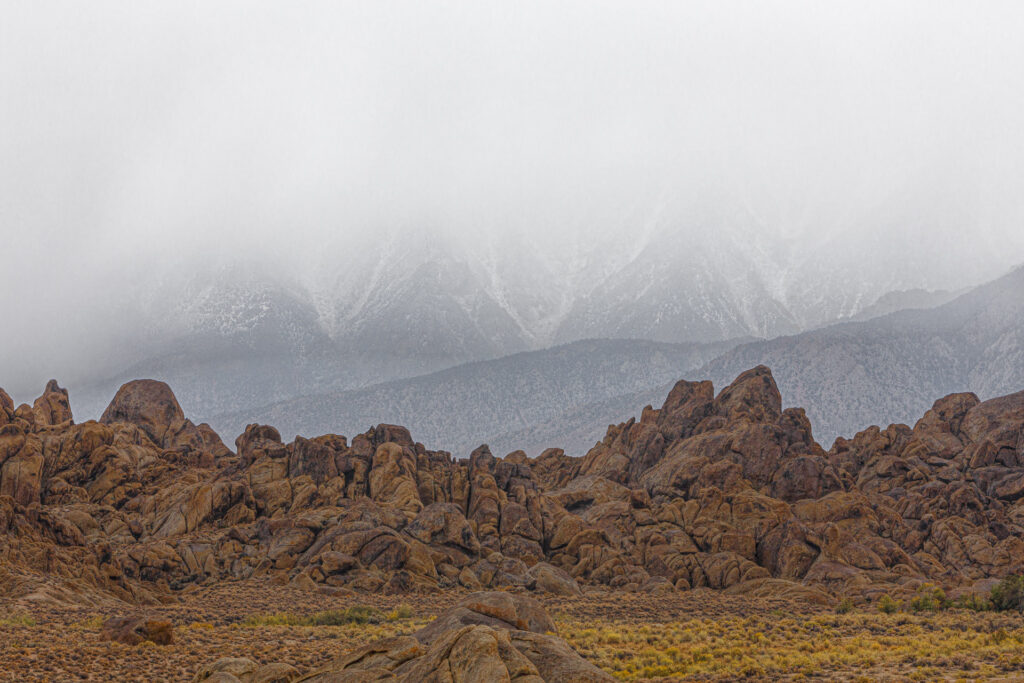
When the snowline drops to just above Lone Pine’s Alabama Hills, the whole landscape feels like it’s holding its breath. One day the hills are all warm granite and dusty gold, and the next there’s this clean white edge drawn across the Sierra, like someone quietly lowered winter overnight. It’s not dramatic in the way big storms are dramatic. It’s more like a whispered reminder that seasons shift whether you’re paying attention or not.
Driving up Whitney Portal Road, you can see the line sharpen as you climb. The boulders stay bare, still glowing in that soft desert light, but the mountains behind them start wearing fresh snow like a new mood. It’s such a strange and beautiful contrast: the high country suddenly austere and silent, the low desert still stubbornly clinging to autumn. You get this feeling that you’re standing between two worlds, and neither one is in a hurry to claim you.
Locals know this moment well. It’s the unofficial start of the quiet season, when the crowds thin and the air smells cleaner and colder. Photographers come out because the light gets ridiculous—gold foreground, white peaks, blue shadows, all in one frame. Climbers and hikers start checking conditions, wondering if it’s time to switch from long days in the Mobius Arch area to winter routes higher up. And anyone who’s lived here long enough knows that once the snowline drops this low, it rarely retreats for long.
There’s something grounding about it. The Alabama Hills have this ancient, weathered calm, and seeing them sitting just below that fresh snow makes you feel like you’re watching time stack itself in layers. Warm rock, cold peaks, shifting sky. It’s a reminder that the Eastern Sierra is always changing, even when it looks carved in stone.