
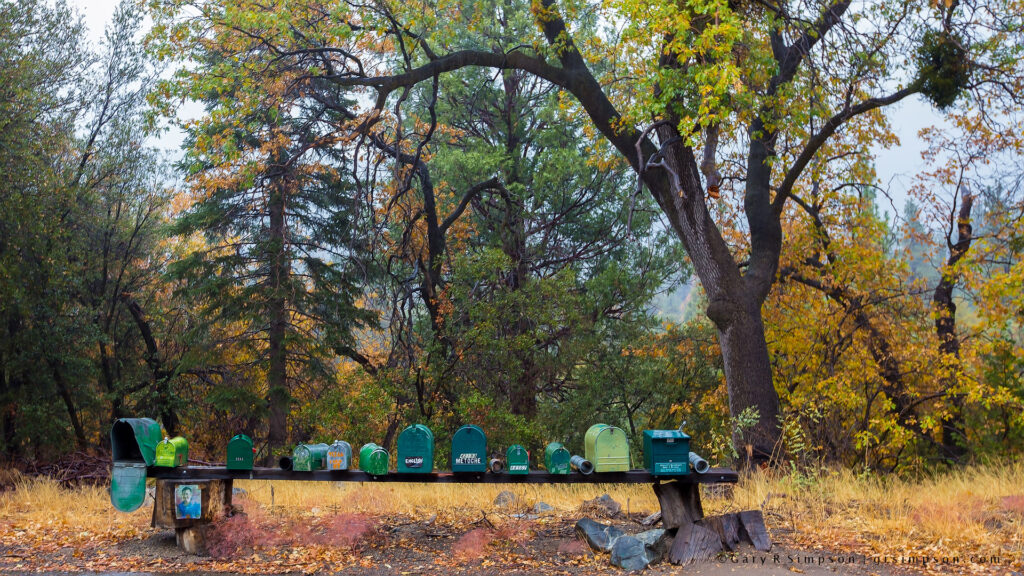
In the early days of rural mail delivery in the San Bernardino Mountains, getting the mail was less of a routine and more of an adventure with a schedule that politely ignored the clock. Mail carriers bounced along rocky wagon roads, crossed creeks that sometimes decided to become rivers overnight, and climbed steep grades where even the horses looked like they wanted a day off. Residents learned that if the mail arrived on Tuesday instead of Monday, it simply meant a fallen tree, a washed-out road, or a particularly stubborn mule had exercised its right to negotiate. Yet somehow the letters, newspapers, seed catalogs, and long-awaited packages almost always made it through, proving that mountain mail carriers possessed an uncanny combination of grit, optimism, and the remarkable ability to smile while delivering your overdue bill.
Traditional rural mailboxes are the pickup trucks of the mailbox world: sturdy, uncomplicated, and perfectly happy to sit beside a dusty road year after year while enduring sun, rain, wind, bird attacks, and the occasional confused squirrel. Usually made of galvanized metal with a rounded top, a little red flag, and a post that has seen better days, they have a wonderfully practical appearance that says, “I am here to receive your electric bill, catalog, and mysterious envelope from the insurance company.” Their beauty lies not in elegance but in dependability, because the traditional rural mailbox asks for very little in return—just a solid post, an occasional coat of paint, and the understanding that nobody is going to mistake it for a fashionable piece of outdoor furniture.