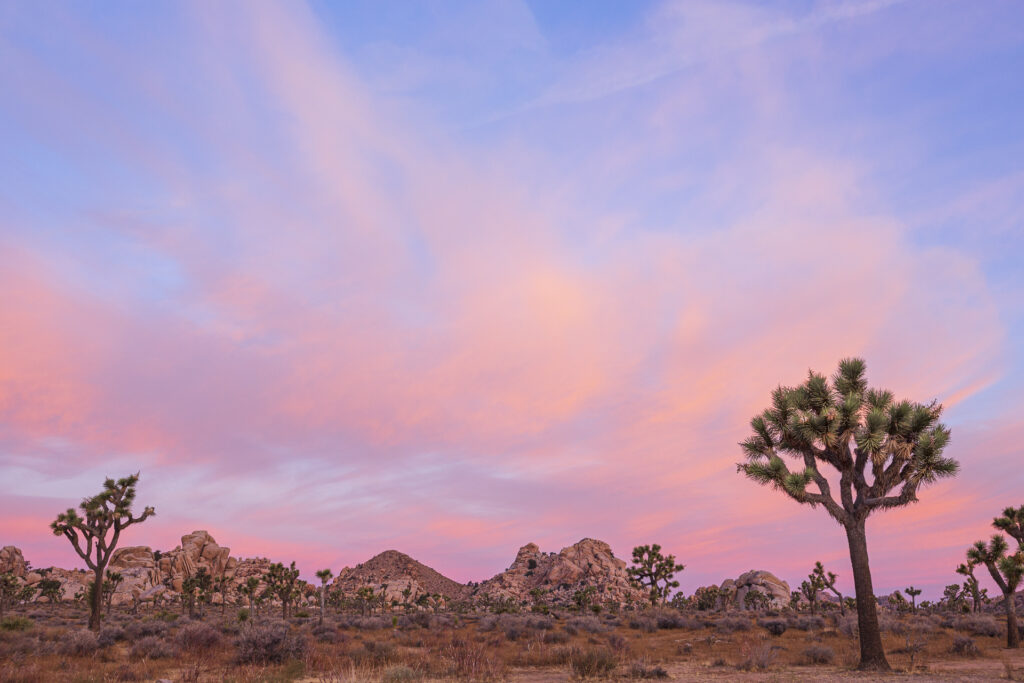
The pink sky over Joshua Tree National Park in early November feels like the desert waking up slowly, stretching into its own quiet kind of drama. The first light doesn’t rush; it seeps in, soft and deliberate, tinting the horizon with a blush that looks almost shy. That pink isn’t a single color but a gradient of warmth—rose fading into peach, peach dissolving into the pale blue that still remembers the night.
As the sky brightens, the silhouettes of the Joshua trees stand like dark brushstrokes against the pastel backdrop. Their crooked arms and tangled shapes seem even more expressive in this gentle light, as if the dawn has paused just to admire them. The air is cool enough to feel crisp but not cold, carrying the faint mineral scent of sand and stone that always lingers after a desert night.
For a few minutes, everything feels suspended. The pink sky reflects off the granite boulders, giving them a soft glow that makes the whole landscape look almost tender. It’s a quiet beauty—no spectacle, no rush—just the desert offering a moment of color before the sun climbs higher and the day sharpens into its usual brightness.