
Rugged Geology of the Eastern Sierra Nevada
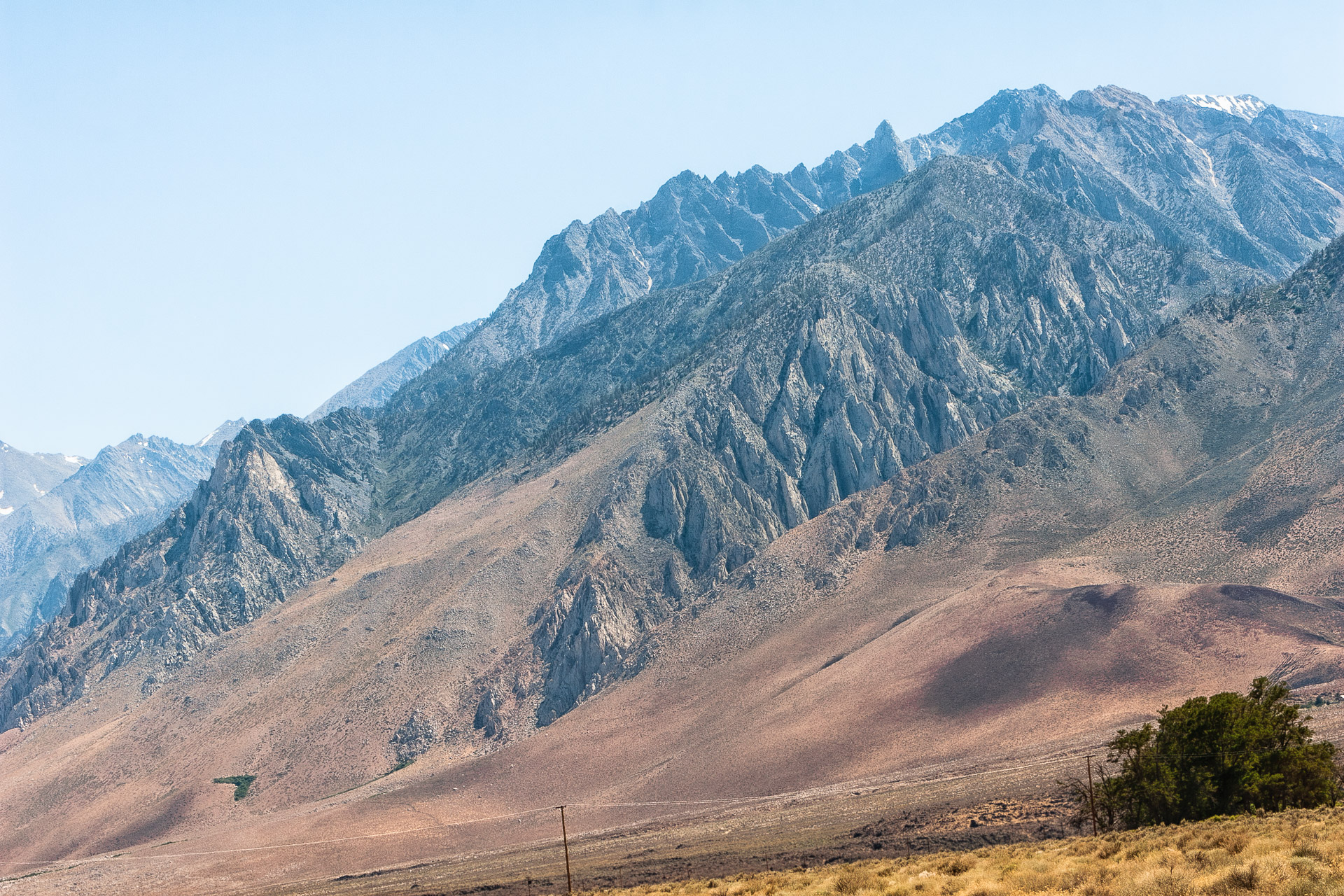
This view from Highway 395 illustrates the dramatic geology of California’s Eastern Sierra Nevada, where steep, rugged mountains rise abruptly above the Owens Valley. Much of the range consists of ancient granitic rock formed deep beneath the Earth’s surface more than 80 million years ago. These rocks are part of the Sierra Nevada batholith, a massive collection of once-molten rock bodies that cooled and crystallized underground. Over millions of years, erosion removed the overlying material, exposing the granite formations visible today. The sharp ridgelines, fractured cliffs, and towering peaks reveal the effects of weathering and erosion on this ancient bedrock.
The mountains’ impressive height and steep eastern face are largely the result of tectonic forces that raised the Sierra Nevada relative to the sinking Owens Valley along a system of faults.
Glaciers, running water, and repeated freezing and thawing have further sculpted the landscape, creating sharp peaks, deep gullies, and fractured rock faces. The smoother, brownish slopes in the foreground contrast with the jagged formations above them and include areas where weathered rock and loose debris have accumulated. At the base of the range, streams carry sediment onto the valley floor, forming broad alluvial fans.
What makes this photograph particularly interesting is the contrast between the relatively smooth lower slopes and the sharply defined rock formations above them. It provides an excellent view of how ancient geological processes and continuing erosion have shaped the Eastern Sierra.