
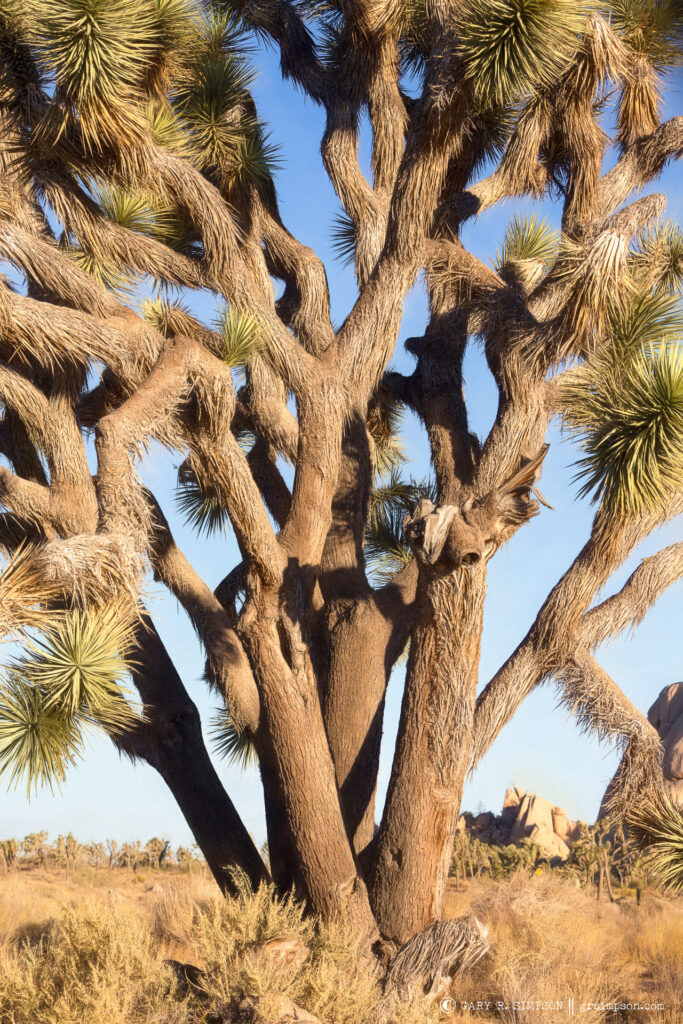
A Joshua tree doesn’t grow like it’s following any rulebook. Instead, it twists, forks, and spirals as if the desert wind whispered secrets and the tree tried to write them down with its branches. When these trees become tangled forms—arms looping over each other, limbs jutting at odd angles—they look less like plants and more like characters caught mid‑gesture.
Each branch ends in a burst of spiky green leaves, like a firework frozen in time. Up close, the bark is rough and fibrous, almost shaggy, giving the tree a weathered, ancient presence. From a distance, tangled Joshua trees resemble silhouettes from a dream: part sculpture, part creature, part question mark.
What makes them unforgettable is their personality. No two are alike. Some lean dramatically, as if exhausted by centuries of sun. Others reach upward in triumphant, crooked victory. And when several grow together, their limbs weave into shapes that feel almost intentional—like a gathering of old friends sharing stories only they understand.
If you ever find yourself in the Mojave Desert, these tangled giants will be the first to greet you. They’re strange, beautiful, and a little mischievous, standing as reminders that nature doesn’t always aim for symmetry; sometimes it aims for character.