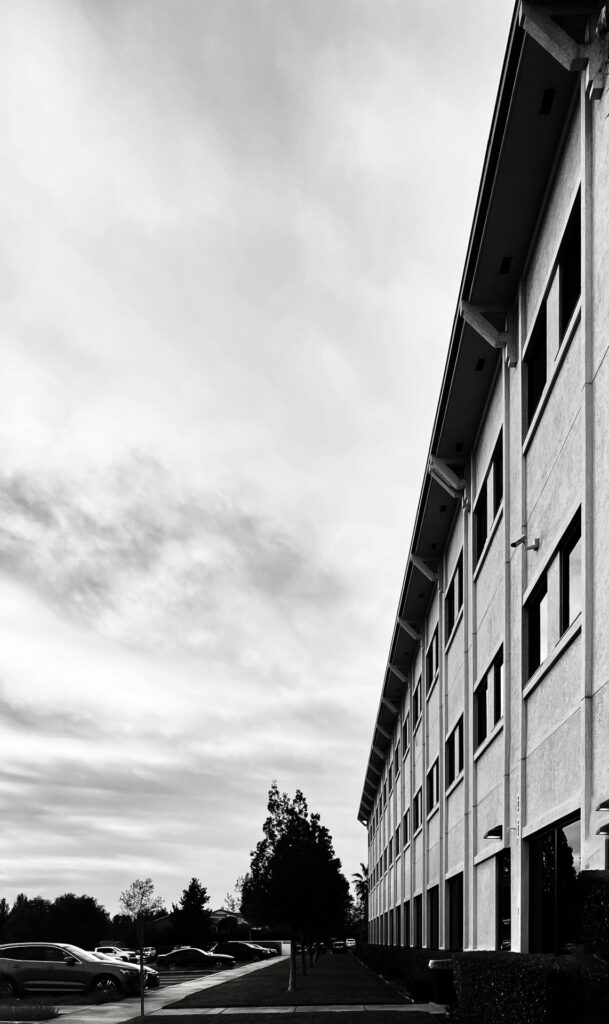
The funny thing about a black‑and‑white architectural photo is how confidently it pretends to be profound. One moment you’re staring at an ordinary building you’ve passed a hundred times, and the next it’s transformed into a brooding philosopher, contemplating the meaning of existence and whether its windows are symmetrical enough to impress the pigeons. Stripped of color, every shadow suddenly believes it deserves its own memoir, and every line insists on being interpreted as a metaphor. Even the humble fire escape starts acting like it’s auditioning for a noir film.
There’s also the delightful illusion that the photographer—yes, the very same person who once took a blurry picture of their own thumb—has become a visionary artist. Tilt the camera a few degrees, and suddenly the building looks like it’s whispering ancient secrets about geometry, time, and the importance of not ignoring your load‑bearing walls. The whole scene becomes a dramatic negotiation between light and structure, as if the sun and the building are locked in a centuries‑long rivalry over who gets to be the main character.
But maybe that’s the charm. A black‑and‑white architectural shot lets us pretend the world is a little more mysterious, a little more cinematic, and a lot more intentional than it probably is. And honestly, if a building wants to feel important for a moment, who am I to argue? If anything, it gives us an excuse to pause, squint thoughtfully, and pretend we understand the deeper meaning of architectural perspective before wandering off to take another picture of a staircase that definitely thinks it’s profound too.