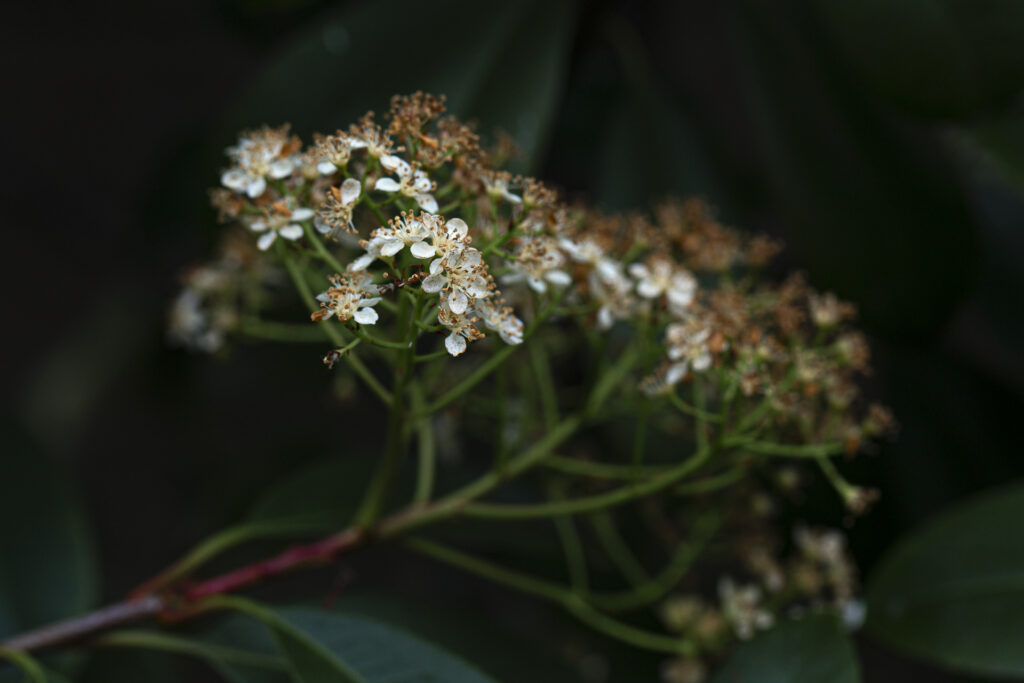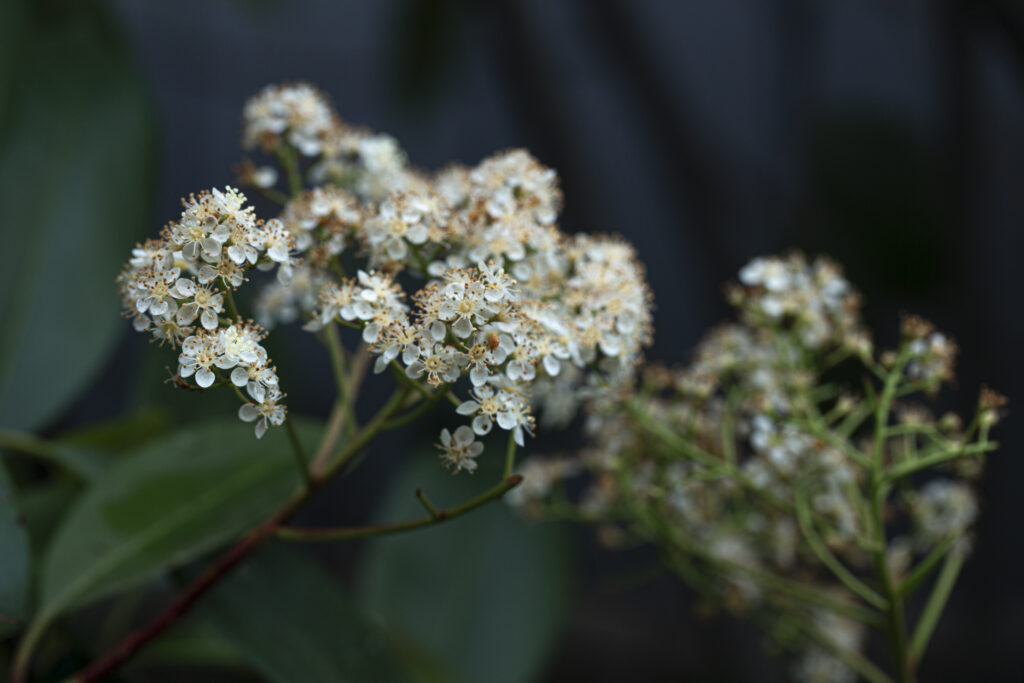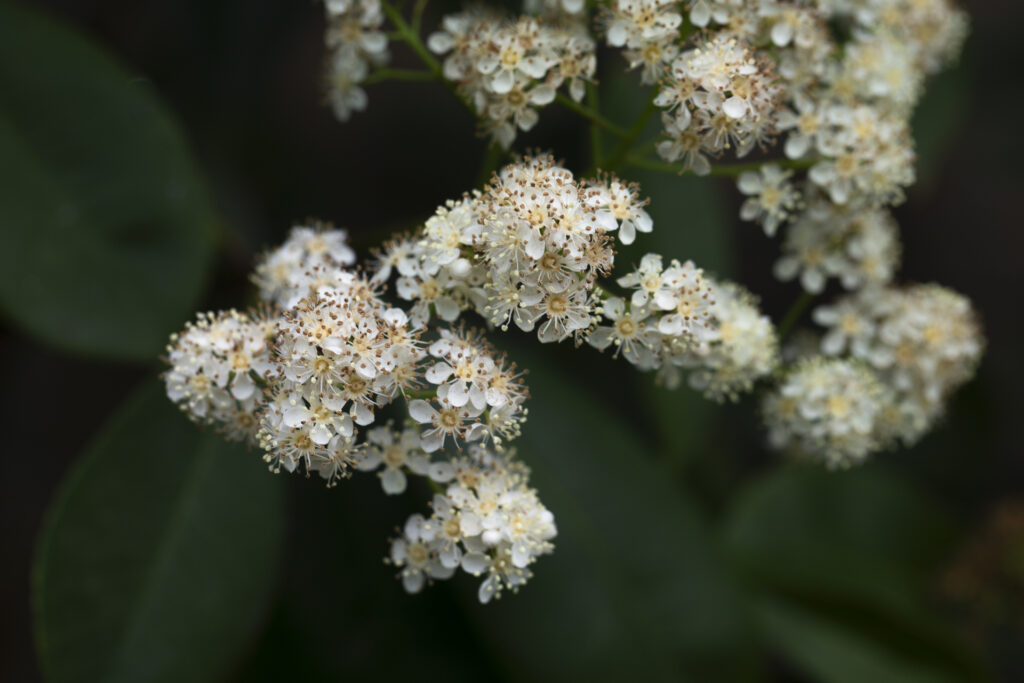
The first warm days of spring always pull me outside with a camera in hand, but nothing announces the season in quite the same way as the red‑tip photinia. Photographing these flowers feels like stepping into a quiet conversation between color and light. The new growth glows with that unmistakable red flush, while the clusters of tiny white blossoms hover like soft punctuation marks across the shrub. It’s a plant that doesn’t beg for attention so much as reward anyone who slows down long enough to notice it, and that’s exactly the kind of subject that makes me linger.
I usually start by walking around the shrub, letting the sun tell me where the story begins. Backlighting turns the young red leaves into stained glass, and the flowers take on a halo that feels almost theatrical. Front light, on the other hand, reveals the texture of the petals and the subtle freckles that give each bloom its personality. The challenge is deciding which version of the truth to tell. The photinia offers both drama and quiet detail, and the camera forces me to choose. Sometimes I lean into the boldness, letting the red leaves dominate the frame. Other times I move in close, letting the blossoms soften the scene until it feels like a whispered secret.
Wind is always the wildcard. Those delicate flower clusters sway even in the gentlest breeze, so I find myself waiting for stillness, breathing with the plant, timing the shutter to the rhythm of the air. There’s something meditative about it. The world keeps moving, but for a moment, the photinia and I agree to hold still together. When the breeze refuses to cooperate, I shift my approach, embracing motion blur to capture the way the flowers shimmer rather than stand still. It becomes less about documenting a plant and more about capturing the feeling of being there.
What I love most is how the flowers stay bright and earnest no matter the hour, like tiny lanterns guiding the eye. By the time I pack up my camera, I always feel like I’ve spent time with an old friend—one who doesn’t speak but still has plenty to say.