
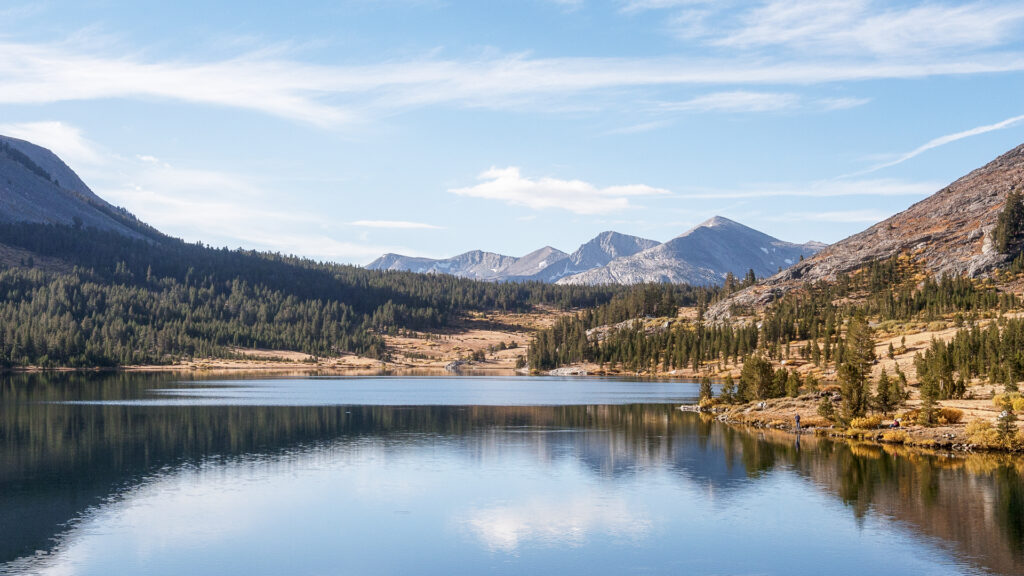
Tioga Lake’s story is one of ancient ice, Indigenous presence, and the slow arrival of explorers and miners who followed long‑established mountain paths.
Tioga Lake sits high in the Sierra Nevada, tucked just north of Tioga Pass, and its history begins long before anyone named it. The region around the lake was shaped by glacial activity, part of the Tioga glaciation that carved out basins and valleys across the Sierra thousands of years ago. The lake itself is a small glacial lake perched at nearly 9,640 feet, its basin formed by the slow movement of ice that once dominated the landscape.
Long before roads or maps, the area was home to Indigenous peoples who lived in and traveled through the Sierra as early as 10,000 years ago. Their presence is woven into the land, from seasonal movements to trade routes that crossed the mountains. These early paths later guided newcomers—John Muir among the first non‑Indigenous Americans to explore the region—who followed the same natural corridors shaped by terrain and tradition.
The name “Tioga” itself doesn’t come from California at all. It’s an Iroquois word meaning “where it forks” or “swift current,” brought west through the naming of Tioga County, New York, which ultimately lent its name to the lake and the pass.
By the 19th century, interest in the high country grew as miners and loggers pushed into the Sierra. The area around Tioga Lake drew attention during the mining boom, especially with the development of the Great Sierra Wagon Road in 1883. Built to reach mining operations near Bennettville, just east of Tioga Pass, the road climbed from the foothills to nearly 10,000 feet in a remarkably short construction period. Though the mines never produced the riches investors hoped for, the road became a lasting route across the mountains.
As mining faded, the lake settled into a quieter chapter. Its remote location kept it relatively untouched compared to nearby Yosemite Valley. Travelers who made the climb found a place defined by clear water, unpredictable mountain weather, and sweeping views of Mount Dana. Even today, Tioga Lake feels like a pause between worlds—just outside the national park, yet far from the bustle of Yosemite’s more famous landmarks.
Over time, the lake became a haven for anglers, photographers, and anyone drawn to the solitude of high‑elevation landscapes.