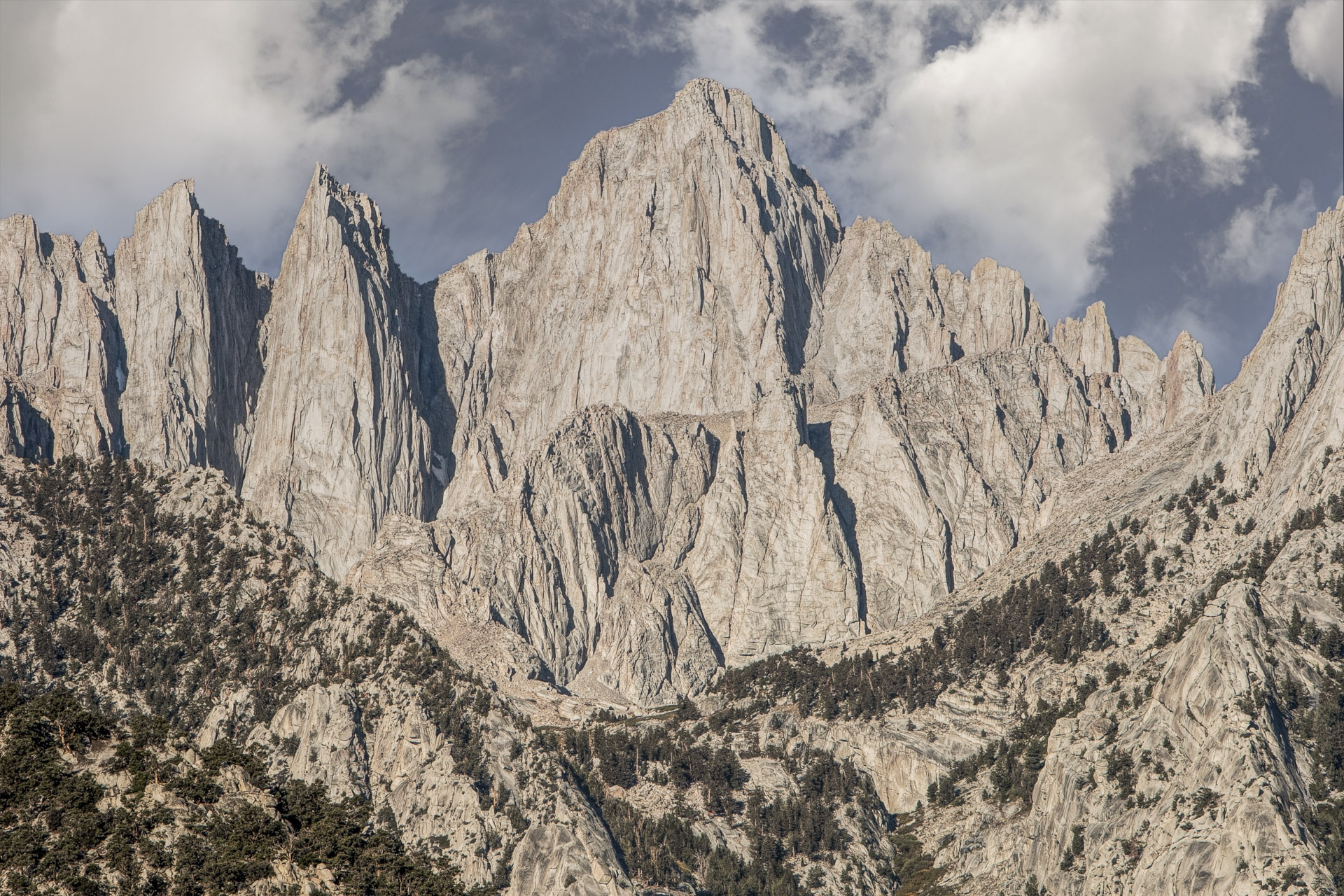
“The Sierra Nevada is five hundred miles of rock put right. Granite freed by glaciers and lifted through clouds where water, frozen and fine, has scraped and washed it into a high country so brilliant it brings light into night.”
― Willard Wyman
The climb to the top of Mt. Whitney in the early 1970s felt like stepping into a world that hadn’t quite decided what it wanted to become. The trail was rougher then, less manicured, more a suggestion carved into granite than the well‑trodden path people know today. Packs were heavier, boots were stiffer, and no one used the word “ultralight.” You simply carried what you had, and what you had was usually canvas, steel, and optimism.
I remember the way the morning light hit the Sierra Nevada as we set out, a kind of dusty gold that made everything look older and more permanent. The air was thin even at the start, but it carried the smell of pine and cold stone, the kind of scent that makes you feel like you’re walking into a story rather than a hike. We weren’t chasing a record or a photo; we were chasing the feeling of being small in a place that didn’t care who we were.
As we climbed higher, the world narrowed to the crunch of gravel underfoot and the slow rhythm of breath. The switchbacks felt endless, but in that era you didn’t count them—you just kept going. Every now and then we’d pass another group, all of us dressed in wool and denim, exchanging nods that said more than words. There was a camaraderie in the effort, a shared understanding that the mountain demanded patience rather than speed.
By the time we reached Trail Camp, the sun was already slipping behind the ridges, leaving the lake in a cold shadow. We set up our tents, boiled water on sputtering stoves, and watched the stars appear one by one. Without headlamps or GPS, the night felt deeper, almost ancient. The Milky Way stretched across the sky like a river of frost, and for a moment the whole group fell silent, each of us wrapped in our own thoughts about the climb ahead.
The final push began before dawn. The air was sharp enough to sting, and the rock under our boots felt brittle with frost. The infamous 97 switchbacks—though we didn’t call them that then—rose above us like a staircase built by someone with a cruel sense of humor. But step by step, breath by breath, we made our way upward until the ridge opened and the world dropped away on both sides. The sun broke over the horizon just as we reached the summit plateau, turning the granite pale pink and casting long shadows that made the peaks look like waves frozen in time.
Standing at the top of Mt. Whitney, the highest point in the lower forty‑eight, didn’t feel like triumph. It felt like gratitude. The wind was fierce, the air thin, and the view stretched so far that it seemed to curve with the earth. We signed the summit register, ate whatever crushed snacks we had left, and let the silence settle around us. No one rushed. No one checked a watch. The moment was enough.
The descent was long, as descents always are, but the mountain had already given us what we came for. Even now, decades later, I can still feel the weight of that old pack on my shoulders and the way the granite felt under my hands. The climb wasn’t just a memory; it became a marker in time, a reminder of what it meant to move through the world with intention, curiosity, and a little stubbornness.