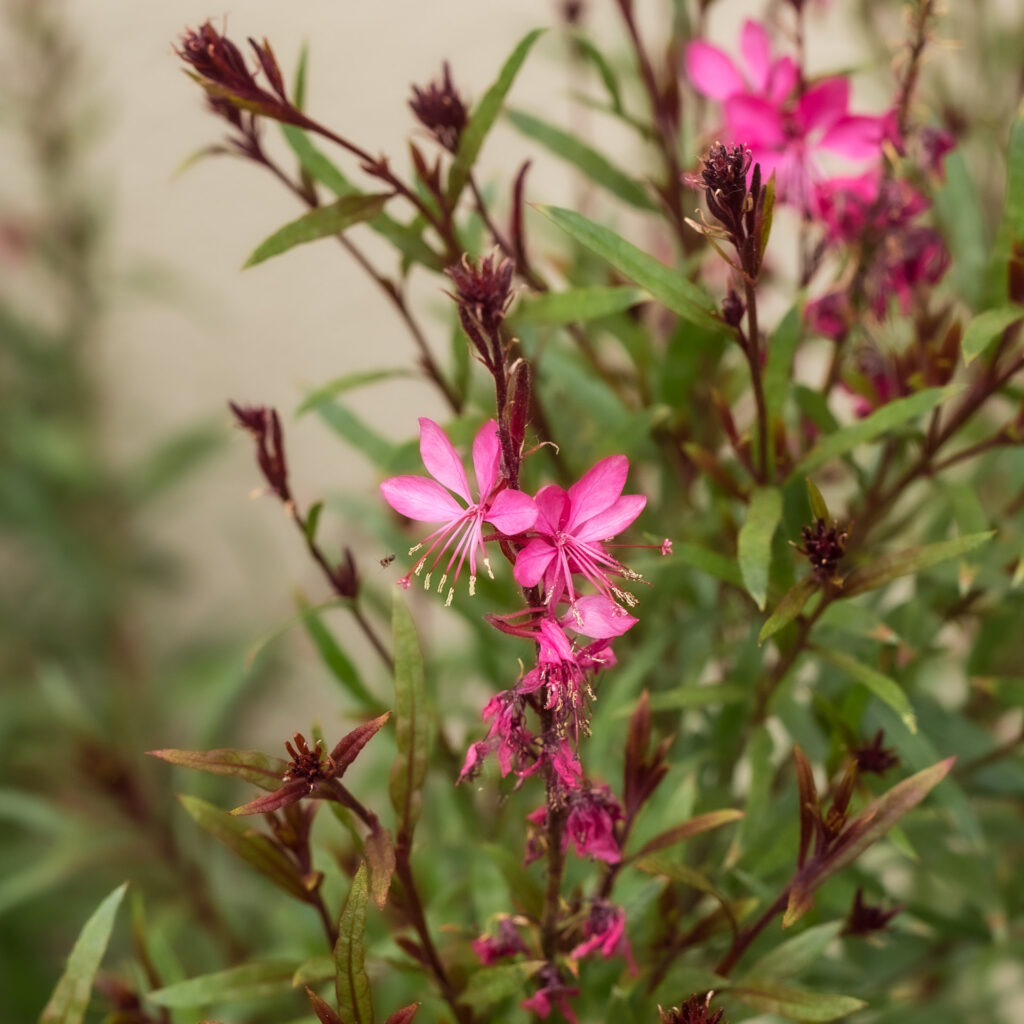
Wandflowers: Where the Garden Learns to Breathe
Some flowers bloom. Wandflowers — those slender, shimmering stems of gaura — float. They rise from the earth like a quiet exhale, each blossom a pale, weightless note suspended in the air. When the breeze arrives, they don’t resist it. They dance. They surrender. They turn the garden into a place that remembers how to move.
Their petals, soft as moth wings, flicker in and out of sunlight. From a distance, they look like a small constellation that decided to drift down and hover just above the soil. Up close, they reveal their wildness — a plant that thrives in heat, in drought, in the kind of soil most flowers would refuse. Wandflowers are elegance born from resilience.
Pollinators know their secret. Bees hum through them like a whispered chorus. Butterflies pause as if greeting distant cousins. Even hummingbirds hover, drawn to the gentle invitation of each bloom.
Plant wandflowers where you want softness, where you want motion, where you want the garden to feel less like a picture and more like a living breath. They weave between sturdier plants, stitching sunlight to shadow, stillness to wind.
Some flowers ask for attention. Wandflowers simply offer it — a quiet, continuous reminder that beauty doesn’t always stand still.