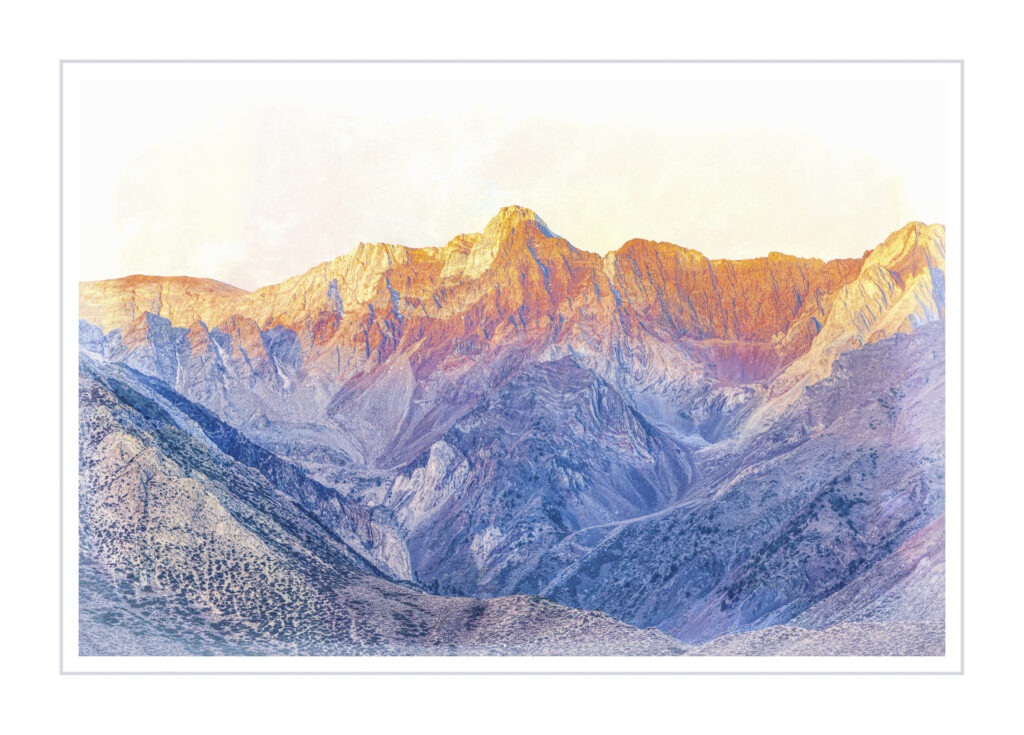
Sunrise on the Eastern Sierra Nevada escarpments always feels like the mountains are letting you in on a secret. Long before the sun actually crests the ridge, the world starts shifting. The air is cold enough to make you aware of every breath, and the granite walls—those massive, abrupt faces that define the Sierra’s eastern edge—begin to glow with a kind of quiet anticipation. It’s the moment when the desert floor is still blue and sleepy, but the peaks are already flirting with gold.
What makes this place different from other mountain sunrises is the drama of the rise itself. The escarpment shoots straight up from the Owens Valley, so when the light hits, it doesn’t creep in politely. It arrives like a revelation. One second the mountains are hulking silhouettes, and the next they’re blushing with soft pinks and warm apricots, as if someone turned up the saturation on the world. The contrast between the shadowed valley and the illuminated ridge is so sharp it feels almost staged, like nature showing off because it knows it can.
There’s a stillness to those early minutes that’s hard to describe without sounding overly poetic, but it’s real. Even the wind seems to pause. The granite absorbs the first light and throws it back in a way that makes the whole escarpment look alive. If you’re close enough, you can see the texture of the rock shift as the sun climbs—cracks, ledges, and ancient scars revealing themselves inch by inch. It’s a reminder of how old these mountains are, and how temporary everything else feels in comparison.
By the time the sun clears the ridge, the valley wakes up fast. Shadows retreat, the sagebrush warms, and the day begins in earnest. But the magic is in those first few minutes, when the world is half-lit and the mountains seem to be deciding whether to let the day in. It’s the kind of sunrise that makes you want to linger, maybe with a thermos of something warm, maybe with nothing at all, just letting the light do what it does.